Cairo Pyramids Tours: How to Choose the Right One
A no-nonsense buyer's guide to Giza pyramids tours in 2026 — tour types compared, red flags, what's really included, and how Hurghada travellers should choose.
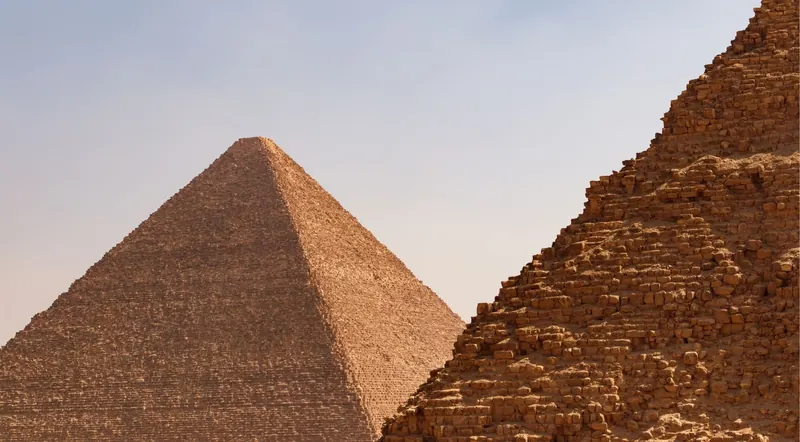
There is no single “best” pyramids tour — there is only the best tour for you, and the biggest mistake travellers make is choosing on headline price rather than on what is actually included. Get the tour type right and the Pyramids of Giza become the day of your trip; get it wrong and you spend your afternoon in a perfume shop watching the clock. This guide cuts through a crowded, confusing market so you can book with confidence.
It is a product guide, not a destination guide. If you want the plateau experience itself — going inside the Great Pyramid, camel rides, the new shuttle system, touts and photography — read our Giza Plateau guide and the Hurghada to the Pyramids of Giza day-trip guide. For the history, construction and full necropolis, see our complete Pyramids of Giza visitor guide. For the wider trip logistics, visas and safety, see Cairo Day Trip from Hurghada: Everything You Need to Know. And if you are weighing how to actually get there, our plane vs bus comparison is the place to start. This article answers one question only: which kind of pyramids tour should you buy?
First, understand what you’re actually buying
Almost every pyramids “tour” sold online is run not by the platform you book on but by an independent local operator. GetYourGuide and Viator are marketplaces — they handle payment, ticketing and support, but the guide, the vehicle and the day itself are delivered by an Egyptian company. This matters enormously: two listings at the same price, on the same platform, can deliver wildly different days. The logo you click reassures you on refunds and payment security; the operator determines whether your guide is a qualified Egyptologist or a driver with a script.
That is why this guide focuses on reading the listing rather than trusting the brand. Once you know what separates a good product from a bad one, the choice gets much easier.
The pyramids tour landscape in 2026
Here is the full menu of what is actually on sale, grouped by what each type is really for.
Giza-only tours (half-day)
The workhorse product: pyramids, the Sphinx and usually the Valley Temple in roughly four to five hours, with hotel pickup in Cairo or Giza. Ideal if you are already in Cairo and short on time. The catch is that the cheapest versions frequently exclude the site entrance fee — more on that below.
Giza + museum (full-day)
The classic first-timer’s day: the Giza plateau plus a major museum, with lunch and a licensed guide, typically seven to eight hours. In 2026 the museum in question is increasingly the Grand Egyptian Museum (GEM) at the edge of the plateau, which was officially inaugurated on 1 November 2025 and opened to the public days later. Its Tutankhamun Galleries display all 5,398 artefacts from the boy king’s tomb together for the first time since Howard Carter’s 1922 discovery, and the museum drew crowds of roughly 19,000 visitors a day in its opening week. Some listings still visit the older Egyptian Museum in Tahrir Square instead — check which one, because they are different places with different collections. Note too that the royal mummies are at neither: on 3 April 2021, 22 royal mummies (18 kings and 4 queens, including Ramesses II) were transferred from the Tahrir museum to the National Museum of Egyptian Civilization (NMEC) in Fustat during the televised “Pharaohs’ Golden Parade”, and they remain there. This full-day format is the single best choice for most people, and the one Hurghada travellers should default to.
The “three pyramid sites” day (Giza + Saqqara + Memphis, sometimes Dahshur)
A deeper archaeological day taking in the Step Pyramid at Saqqara, the open-air ruins of Memphis and — on the fuller versions — the Bent and Red Pyramids at Dahshur. These older sites are quieter and, for many visitors, more atmospheric than Giza itself. The honest caveat: four sites in one day is a lot, and rushed operators are common. Reviews for these itineraries repeatedly describe guides trying to trim Dahshur (“you can see it from Saqqara”) or hurrying Giza to fit everything in. Excellent as a private tour with a good guide; frustrating as a cheap group scramble. Two products define the split: From Cairo: Pyramids of Giza, Sphinx, Saqqara & Memphis (rated 4.7★ by 3,716 travellers) is the Giza-anchored group version, while Cairo: Saqqara, Memphis and Dahshur Day Trip with Lunch (rated 4.7★ by 366 travellers) is the private one that actually reaches Dahshur — an hour at the Bent Pyramid and 45 minutes at the Red — rather than trimming it.
Private vs small-group vs large-group coach
This is the axis that changes your day the most:
- Private — just your party, your guide, your pace. You can linger, skip shopping stops and adjust the plan. Best value-for-experience for couples, families and anyone who dislikes being herded.
- Small-group (typically up to eight) — a middle path: cheaper than private, still nimble.
- Large-group coach — the cheapest option and the one most likely to include long shopping stops, rigid timing and a big group strung out across the plateau. Fine if budget is the priority and you know what you are accepting.
Adventure combos: camel, horse, quad bike
Widely sold, often as bolt-ons. Camel and horse rides deliver the classic desert photo; quad-bike/ATV safaris run in the desert outside the archaeological fence (riding inside the complex is prohibited). Welfare standards among camel and horse operators vary sharply — ask about the operator’s animal-welfare policy before booking any animal activity.
Timing specialists: sunrise, early access and sunset
Sunrise tours (very early pickup, roughly 4:30–5:00am) deliver cool air, soft light and thin crowds, usually with breakfast and a camel ride. A handful of premium operators sell genuine early access before public opening, arranged through Ministry permissions — these are expensive and small-group. Sunset and “golden hour” tours are the photographer’s alternative.
Sound and Light Show tours
An evening product: you sit facing the floodlit pyramids while the Sphinx “narrates” a light-and-projection show, with headset translation in multiple languages. It is a spectacle rather than a history lesson, and a good add-on for a second evening — not a substitute for a daytime visit. Watch for versions that bolt on an unannounced perfume or oil shop.
Inside-the-Great-Pyramid tours
Entry into the Great Pyramid of Khufu requires a separate, limited, timed ticket that many tours do not include by default. If climbing into the King’s Chamber matters to you, confirm the interior ticket is bundled — it is a hot, steep, bare climb that isn’t for everyone, as our inside the Great Pyramid guide explains in detail.
Luxury and VIP tours
The premium tier: private Egyptologist, VIP lounge, skip-the-line handling and — the signature feature since the 2025 plateau overhaul — a private electric golf cart that carries you between monuments instead of the shared shuttle. Some ultra-premium operators also arrange access to normally-closed chambers or the Sphinx enclosure. Worth it if comfort, pace and continuous commentary are priorities.
Photography-focused tours
Run by photographer-guides who know the light, the angles and the quiet windows. A niche but genuine product for enthusiasts; overkill for a casual snapshot.
Layover / transit tours from Cairo airport
Built for travellers with a long connection: airport pickup, a dash to Giza (and sometimes a museum), and a buffered return to the terminal. The consensus among operators who run these weekly is blunt: under six hours’ layover, don’t leave the airport — Cairo traffic and the airport-to-Giza distance eat the margin. Eight hours or more makes it realistic.
Multi-day packages that include Giza
Giza is the anchor of most Egypt itineraries — Cairo-plus-Nile-cruise packages, Cairo-and-Luxor combos, and longer classic tours. If you have more than a day, folding Giza into a longer package is often better value than a standalone excursion.
Where tours depart from
The same monuments, very different logistics depending on your starting point: Cairo hotels, Giza hotels, Nile cruise docks, the airport, and — most relevant to you — the Red Sea resorts of Hurghada, Sharm el-Sheikh and beyond. From Hurghada the trip is a long day out, which narrows your realistic options considerably (see the final section).
Specialist audiences
The market has matured enough to offer family-focused tours (gentler pace, kid-friendly guides), female-guide tours, and accessible / wheelchair-friendly options — the new visitor centre is step-free and, uniquely, wheelchair users can arrange private vehicle access onto the plateau interior road when the general ban applies. Always confirm accessibility specifics directly with the operator.
Other Experiences You Might Enjoy
Beyond the plateau, Cairo and the Red Sea coast offer plenty to round out your trip — Nile felucca sails, the Khan el-Khalili bazaar, day trips to Luxor, and back in Hurghada, snorkeling, diving and desert safari excursions. Worth a browse if you have extra time either side of your pyramids day.
Tour types at a glance
| Tour type | Typical duration | Best for | Watch out for |
|---|---|---|---|
| Giza-only half-day | ~4–5 hrs | Cairo-based, short on time | Entrance fees often excluded |
| Giza + GEM full-day | ~7–8 hrs | First-timers; Hurghada travellers | Which museum? Confirm GEM vs Tahrir |
| Giza + Saqqara + Memphis (+Dahshur) | ~8 hrs | History lovers, second visits | Overstuffed; rushed on cheap group tours |
| Private tour | Flexible | Couples, families, control-seekers | Costs more; verify guide is licensed |
| Large-group coach | 8+ hrs | Tight budgets | Shopping stops, rigid pace, big groups |
| Camel / horse / quad combo | +1–2 hrs | Photos, adventure | Animal welfare; rides are extras |
| Sunrise / early-access | ~5–6 hrs | Photographers, crowd-avoiders | Very early start; premium price |
| Sound & Light evening | ~2–3 hrs | Second-evening add-on | Not a daytime substitute; hidden shops |
| Inside Great Pyramid | Add-on | Bucket-listers | Separate timed ticket; often not included |
| VIP / golf-cart | ~4–5 hrs | Comfort, mobility, pace | Highest price; confirm what “VIP” means |
| Layover / transit | 6–12 hrs | Long airport connections | Skip if layover under 6 hrs |
No prices are shown here deliberately — rates change constantly and vary by operator. Always verify current pricing before booking.
What separates a good tour from a bad one
This is the heart of the decision. The tour type gets you into the right category; these factors decide whether the day is good.
Are entrance fees actually included?
This is the single biggest source of complaints. Cheap Giza tours routinely advertise a low headline price and then exclude the plateau entrance ticket, the museum ticket, and the interior-pyramid ticket — which you then pay in cash on the day. A listing can look half the price of a rival and end up costing the same or more once tickets, lunch and “extras” are added. Read the “what’s included” and “what’s not included” sections line by line. The gold-standard listing states plainly that all site entrance fees are included and specifies whether the Khufu interior is covered.
The shopping-stop problem
Papyrus “institutes”, perfume and essential-oil shops, and carpet “schools” are the classic commission traps. Drivers and guides earn a cut, which is why the stops can be aggressive and why they eat into your sightseeing time. Some listings are refreshingly honest and spell the stops out — one widely-sold Giza tour openly lists “20-minute stops” at a named perfume shop, a papyrus gallery and a carpet workshop. Others bury them, and you only discover them in the reviews. How to avoid them: book private, state clearly before departure that you want no shopping stops, and search the reviews for the words “perfume”, “papyrus”, “shop” and “pressure”. Good operators either omit these stops entirely or make them genuinely optional.
Guide quality — and what “licensed Egyptologist” really means
In Egypt, guiding at antiquities sites is regulated. A genuine licensed guide holds a licence from the Ministry of Tourism and Antiquities and is registered with the Egyptian General Tourist Guides Syndicate; most hold a university degree in Egyptology or archaeology. This is not marketing fluff — an unlicensed “guide” working the plateau is both illegal and usually a prelude to a shopping-commission run. The difference between a licensed Egyptologist and a driver-with-patter is the difference between understanding what you are looking at and taking photos of piles of very old stone. Look for listings that specifically promise a licensed Egyptologist guide (not merely a “professional guide” or “tour leader”), and don’t hesitate to ask the operator for the guide’s syndicate credentials before booking. You can also cross-check an agency against the Egyptian Travel Agents Association (ETAA) public directory.
Duration honesty
“Full-day, 8 hours” can mean eight hours of your life, of which five are transport, lunch and shopping and three are actual sightseeing. From Cairo this is annoying; from Hurghada, where the drive alone is enormous, it is decisive. Read reviews for phrases like “rushed”, “only 20 minutes at the pyramids”, or “spent too long at lunch/shops”.
Pickup and drop-off reliability
Late or no-show pickups are a recurring complaint on budget tours. Good listings state a clear pickup window, a recognisable vehicle or a named-sign meeting procedure, and a waiting policy. Screenshot your confirmation and the meeting-point details before you travel.
Tipping
Tipping (baksheesh) is deeply embedded and effectively expected across Egyptian tourism — guides, drivers, restaurant staff, restroom attendants. It is almost never included in the tour price. Budget a daily amount for your guide and a smaller amount for your driver, carry small notes (Egyptian pounds are ideal), and treat it as part of the true cost of the day. Good listings are upfront that gratuities are excluded; that honesty is a positive sign, not a red flag.
Free cancellation and “reserve now, pay later”
Both major platforms offer free cancellation (usually up to 24 hours before) and reserve-now-pay-later on most eligible listings. There is little reason to book a non-refundable pyramids tour weeks ahead when a flexible one is available at a similar price. Flexibility is worth real money in a destination where plans shift.
How the new plateau system changes tour logistics in 2026
The Giza plateau was overhauled in 2025 and the changes directly affect how tours run — this is the newest and least-understood part of choosing a tour.
The historic Mena House gate is closed to general entry. The main entrance is now “The Great Gate” on the Cairo–Fayoum desert road, part of a redevelopment led by Orascom Pyramids Entertainment Services Company reportedly costing around $51 million. Private cars and tour buses are banned inside the complex. Instead, visitors and their guides ride free, colour-coded electric shuttle buses between the monuments (the main red route links the visitor centre, Menkaure, Khafre and the Sphinx), which the operator says run at roughly five-minute intervals. The Sphinx Gate on the east side still operates but has no ticket office, so it works only for people holding a pre-bought ticket — in practice it is used mostly as an exit.
What this means for tours:
- Your guide can ride the shuttle with you — the system explicitly provides transport for “visitors and their guides”. But the shared-bus format has drawn real criticism from the guiding profession. Hamdy Ezz, head of the Egyptian Tour Guides Syndicate, told Smithsonian Magazine that the system “reduces the tourists’ enjoyment of the sites and causes congestion at the new entrance”, and criticised authorities for failing to consult tourism institutions.
- The buses don’t wait. Tour guide Hoda Radi, also quoted in Smithsonian Magazine, said they “leave every few minutes, making it impractical for tourists to leave belongings while taking photos”, and that the shared system “extends the duration of visits and restricts tourists to a fixed route, limiting their freedom to explore”. Groups can get strung out or split, and the guide has less control over pacing than under the old drive-up model.
- This is exactly why VIP golf-cart tours now exist. On a private cart, your Egyptologist stays with you throughout and delivers continuous commentary — restoring the pacing the free shuttle takes away. Golf carts, large-group coaches (roughly 25+) and wheelchair-access vehicles are the only exceptions to the vehicle ban, and all must be pre-arranged in advance, at a premium, not sorted at the gate.
- Watch the exit trap. Multiple 2025 visitors reported being “herded to the exit” at the visitor centre by mistake — and because tickets are single-entry, leaving means buying again. A good guide manages this for you; on a DIY basis it has cost people over an hour.
- Allow more time. The relocated gate plus the shuttle add meaningful time to the visit. The practical upshot from on-the-ground guides: half-day Giza visits are now tighter than they were, and full-day framing is safer.
Timing and sequencing: what’s realistic in one day
- Go early. Early morning means cooler air, softer light and fewer crowds — and the tour types that deliver it are sunrise tours and the earliest-departing full-day tours.
- Realistic one-day combos (worked through hour by hour in our one day in Cairo itinerary): Giza + GEM is comfortable. Giza + Saqqara + Memphis is a full but doable day. Giza + three southern sites + a museum in one day is overstuffed — something will be rushed.
- Museum closing days matter. The GEM currently runs a split weekly schedule with extended evening hours on some days; the older Tahrir museum and NMEC keep their own hours. Confirm your museum is open on your date.
- Fridays, holidays and Ramadan. Friday midday brings prayer-time crowds and brief pauses; Egyptian public holidays and school breaks push numbers up sharply. During Ramadan, museum and site hours are reduced (GEM galleries typically close by mid-afternoon), so morning visits become essential. See our best time to visit notes when planning.
What a typical full-day Giza + GEM tour looks like
A realistic hour-by-hour for a Cairo-based full-day tour (Hurghada versions bookend this with long transport — see below):
- Morning pickup from your hotel by your guide in an air-conditioned vehicle.
- Giza plateau first, while it is cooler: through the Great Gate, security and the visitor centre, then the electric shuttle out to the monuments. Expect around two to three hours here — the three main pyramids, the panorama viewpoint, the Sphinx and the Valley Temple, with the guide moving you between shuttle stops.
- Optional add-ons slotted in here: a camel or horse photo-ride, or the separate interior-pyramid ticket if included.
- Lunch at a local restaurant, often with a pyramid or Nile view. (On cheaper tours this is where a shopping stop may appear.)
- Grand Egyptian Museum in the afternoon: the Grand Staircase, the Ramesses II statue, the galleries and the complete Tutankhamun collection. Budget a couple of hours; it is vast.
- Return to your hotel by early evening.
Booking platforms compared: where should you actually book?
- GetYourGuide / Viator (online marketplaces). The safest default for most travellers: verified purchase-only reviews, free cancellation, payment protection and no in-person pressure selling. Neither operates the tours; both connect you to local operators. Prices between them are usually close — it pays to check both for the exact same itinerary.
- Direct with a licensed local operator. Often marginally cheaper and gives you a direct line if something goes wrong — but only if you have vetted the operator’s licensing (the Egyptian Travel Agents Association maintains a public directory). Best for confident, well-researched bookers.
- Hotel desks. Convenient and accountable if you’re already checked in, but usually pricier and limited to their partner operators.
- Street agents / airport touts. Avoid. No recourse, no verified reviews, and the classic entry point to the “site is closed, let me take you somewhere better” scam.
How to read reviews properly
The overall star rating is nearly useless on its own. Instead:
- Sort by most recent and check the tour has reviews from the last few weeks or months — a 500-review tour with nothing recent is a warning sign.
- Look for reviews that name the guide and describe the actual pacing.
- Search the review text for “shop”, “perfume”, “papyrus”, “rushed”, “hidden”, “extra” and “entrance fee” to surface the problems the marketing hides.
- Read patterns, not outliers — one furious review among hundreds of good ones is noise; a recurring complaint is signal.
Red flags checklist
Before you book, treat any of these as a warning:
- Entrance fees not clearly stated as included (or vaguely described)
- No mention of a licensed Egyptologist guide — just “professional guide” or “tour leader”
- Shopping stops mentioned in the itinerary or recurring in recent reviews
- Recent reviews mention “rushed”, “only 20 minutes at the pyramids”, or long shop/lunch stops
- Vague or missing pickup window and waiting policy
- No free-cancellation option
- Few reviews, or none in recent months
- Suspiciously cheap headline price versus comparable tours (the tickets are hiding somewhere)
- “Inside the pyramid” implied but not confirmed as an included ticket
- Pressure to book off-platform or pay cash to a street agent
Questions to ask before booking
- Are all entrance fees included — Giza plateau, the museum, and (if wanted) the Great Pyramid interior?
- Is my guide a licensed Egyptologist? Can you confirm their syndicate registration?
- Are there any shopping stops? Can they be skipped?
- Is this private or shared, and if shared, what is the maximum group size?
- What are the exact pickup time and location, and how long will the vehicle wait?
- Which museum does this visit — the Grand Egyptian Museum or the older Tahrir museum?
- Is lunch included, and are dietary needs catered for?
- What is the cancellation deadline for a full refund?
- Are tips expected on top, and roughly how much?
- For Hurghada: is this by plane or by coach, and what time will I be back?
Specific advice for Hurghada-based travellers
Your starting point narrows the choice dramatically — and simplifies it.
From Hurghada, Cairo is about 462km (287 miles) away via the Eastern Desert, normally a five-to-six-hour drive. That rules out Cairo-based half-day tours entirely: you cannot bolt a four-hour Giza tour onto a Red Sea holiday without a way to cover the distance. In practice you have two realistic products, both full-day, transport-inclusive packages:
- By plane. An early domestic flight to Cairo, a private guide and vehicle meeting you airside, then Giza plus a museum, and an evening flight back. It is the most comfortable and time-efficient option — you get the most sightseeing per hour and the least fatigue. It costs more.
- By coach. A very early start (pickups commonly around 1:00–2:30am), roughly five to seven hours’ drive each way — often in a police-regulated convoy that adds time — a day in Cairo, and a late-night return. The full round trip is commonly an 18–20 hour day. It is far cheaper and genuinely gruelling; better for younger, budget-focused travellers than for families with small children or anyone over about 55.
Our plane vs bus guide covers the full cost/time trade-off in detail.
What this means for tour choice: from Hurghada you want a package that already includes the long-distance transport, a licensed Egyptologist, all entrance fees, and lunch — and that is honest about the day’s length. The premium and VIP golf-cart formats, sunrise tours and multi-site Saqqara days are mostly designed for people already staying in Cairo or Giza; some can be arranged as part of a private Hurghada package, but you’ll pay for the customisation. For most Red Sea visitors the sweet spot is a private or small-group full-day Giza + GEM tour by plane, or the same by coach if budget rules. Avoid any Hurghada listing that is vague about entrance fees or the return time.
Browse more Cairo and pyramids options on our tours page.
Frequently asked questions
How much does a pyramid tour cost?
Prices vary enormously by tour type, group size and what’s included, and they change often — so we don’t quote figures here. As a rule of thumb, shared group tours are cheapest, private tours cost more but deliver far more control, and VIP/golf-cart tours sit at the top. The crucial point is comparing like with like: a cheap tour that excludes entrance fees, lunch and tips can end up costing the same as an all-inclusive one. Always verify current pricing and the full inclusions before booking.
Do I need a guide at the pyramids?
You can visit independently, but a licensed Egyptologist transforms the experience from “impressive rubble” into a coherent story — and, in 2026, a guide also handles the new shuttle system, ticketing and the single-entry exit trap for you. For most first-time visitors, and especially for anyone coming all the way from Hurghada for a single day, a guided tour is well worth it.
Are pyramid tours worth it?
Yes — the Pyramids of Giza are the only surviving wonder of the ancient world, and a well-chosen tour is the difference between a smooth, informative day and a stressful one. The value is entirely in choosing the right tour: licensed guide, fees included, no forced shopping.
How long do you need at the pyramids?
Around two to three hours on the plateau itself covers the three main pyramids, the Sphinx, the Valley Temple and the panorama viewpoint at a comfortable pace. Add a museum and you have a full day; add Saqqara and Memphis and you have a long full day.
What’s the best pyramid tour?
For most travellers, a private or small-group full-day tour combining Giza with the Grand Egyptian Museum, led by a licensed Egyptologist, with all entrance fees and lunch included and no shopping stops. From Hurghada, that same tour by plane is the premium choice; by coach the budget one.
Is the Great Pyramid interior included in tours?
Usually not by default. Going inside the Great Pyramid of Khufu needs a separate, limited, timed ticket. If it matters to you, confirm explicitly that the interior ticket is included — the climb is hot, steep and cramped.
Giza-only or should I add Saqqara and Memphis?
If it’s your first visit and you have one day, Giza plus a museum is plenty. Add Saqqara, Memphis and Dahshur only if you’re a keen history traveller or on a return visit — and book it private so you’re not rushed between four sites.
Is the Grand Egyptian Museum open, and is it on tours?
Yes — the GEM was inaugurated on 1 November 2025 and is now the museum featured on most current full-day Giza tours, displaying the complete Tutankhamun collection. Double-check whether your specific tour visits the GEM or the older Egyptian Museum in Tahrir Square, as they are different sites. For the museum itself, see our Grand Egyptian Museum guide, and for how the two compare, Egyptian Museum vs the GEM.
Can I do a pyramids tour on a Cairo airport layover?
Yes, if your layover is long enough. Operators who run these routinely advise against leaving the airport for layovers under six hours; eight hours or more makes a Giza (and sometimes museum) run realistic. Book a dedicated layover tour with airport pickup and a buffered return.
How do I avoid the shopping stops?
Book a private tour, tell the operator and guide before departure that you want no shopping stops, and screen recent reviews for the words “perfume”, “papyrus” and “shop”. Reputable operators either omit these stops or make them optional.
Are the tours safe, and what about the touts?
Organised tours are the safest and least stressful way to visit — your guide handles the touts, tickets and transport. The persistent hassle is mostly outside the gates and around unofficial “guides”; booking through a verified platform with a licensed operator sidesteps nearly all of it.
What should I tip on a pyramids tour?
Tipping is expected and rarely included in the tour price. Plan a daily gratuity for your guide and a smaller amount for your driver, carry small Egyptian-pound notes, and factor it into your true cost.
Booking tip: the best pyramids tours — especially private guides and the early-morning slots — sell out fastest in peak season. Compare current listings, check the most recent reviews, and book a free-cancellation option so you can lock in your date now and stay flexible.
See the Pyramids of Giza — One Full Day from Hurghada
Join 7,000+ travelers who rated this Cairo day trip 4.6/5. Hotel pickup, air-conditioned transport, an expert Egyptologist guide, and lunch are all included. Free cancellation up to 24 hours before you go.
Check Availability & Book