The Egyptian Museum in Tahrir Square: Tickets, Highlights and What's Still There
A 2026 guide to the Egyptian Museum in Tahrir Square: what is still on show after the GEM, a floor-by-floor walkthrough, the masterpieces, tickets, hours and how to visit from Hurghada.
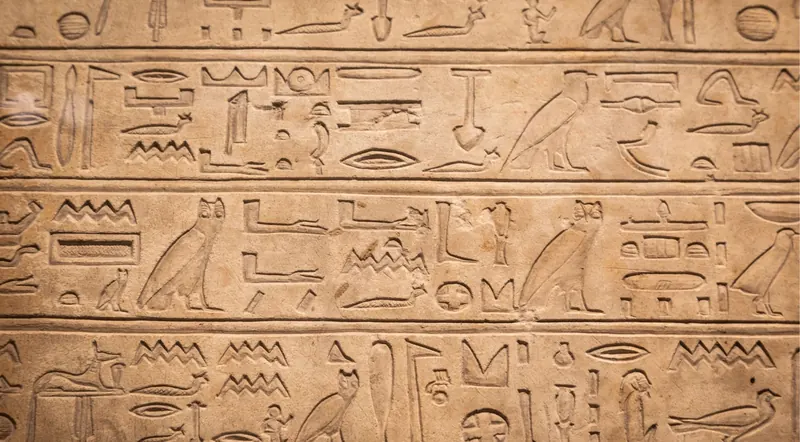
The Egyptian Museum on Tahrir Square is still open, still holds the Narmer Palette, Khafre Enthroned and the silver coffins of Tanis, and is quieter than it has been for a century. Tutankhamun’s treasures left for the Grand Egyptian Museum in Giza, which was inaugurated on 1 November 2025 and opened to the public on 4 November, and the crowds left with them. What remains is a building that is itself an antique: the oldest archaeological museum in the Middle East, with around 170,000 objects, most of them still shown in cluttered, glass-cased, faintly Victorian rooms that Egyptologists have loved and cursed for generations. Below you will find what is on show in 2026, how to find your way around a confusing floor plan, and whether the museum earns a place on a Cairo trip from Hurghada now that the boy king has moved out.
If you are still choosing between Cairo’s museums, start with our Egyptian Museum vs Grand Egyptian Museum comparison. This page is for readers who have already picked Tahrir, or who searched for the museum by name and want to visit it properly.
The Institution and the Building
From Bulaq to Tahrir
The museum’s story begins with the Frenchman Auguste Mariette. Egypt’s ruler Mohammed Ali had banned the export of antiquities in 1835, and in 1858 Mariette was appointed the first director of the newly created Egyptian Antiquities Service, the ancestor of today’s Supreme Council of Antiquities. Mariette kept his growing hoard of excavated finds in a former warehouse in the riverside district of Bulaq.
Bulaq proved a dangerous spot. A severe Nile flood in 1878 damaged artefacts and swept away many of Mariette’s own notes and drawings. In 1889–1891 the collection moved to an annexe of Khedive Ismail’s palace at Giza (on the site of today’s zoo), where Jacques de Morgan reorganised it. It kept growing and still needed a permanent, purpose-built home.
In 1895 the Egyptian government launched an international competition, the first of its kind, for the design of a new museum. From dozens of entries the jury chose the French architect Marcel Dourgnon (Marseille, 1858 – Paris, 1911), a graduate of the École des Beaux-Arts. The foundation stone was laid on 1 April 1897 in the presence of Khedive Abbas Hilmi II, and the building, put up by the Italian firm of Giuseppe Garozzo and Francesco Zaffrani, was inaugurated on 15 November 1902.
A building that is itself an exhibit
Dourgnon designed a Beaux-Arts, neoclassical palace: two storeys, salmon-pink (some call it terracotta), with a central domed atrium lit by a glass skylight and galleries running around it. The façade carries Egyptian goddesses carved in a late-classical Greek style, and its marble panels bear Latin inscriptions, a reminder that Egypt’s heritage was first curated through a European lens. It was the first purpose-built museum in the Middle East, and for that reason it sits on Egypt’s UNESCO World Heritage tentative list.
The layout was planned as a walk through time: heavy stone monuments on the ground floor, arranged chronologically, and smaller, more personal objects upstairs.
Mariette’s tomb and the Egyptologists’ garden
Before you go in, stop in the front garden. To one side stands the tomb and memorial of Auguste Mariette (1821–81): a bronze statue of the man, arms folded, above an Art Deco sarcophagus inside a semicircular marble monument. Mariette asked to be buried in the garden of his museum, and his remains were moved here when the Tahrir building opened.
Around the sarcophagus stand busts of two dozen or so great Egyptologists, European and Egyptian. They include Jean-François Champollion, who deciphered hieroglyphs, Gaston Maspero, Mariette’s successor as director, Karl Richard Lepsius and Ippolito Rosellini, and, added in the 1950s, Egyptian scholars such as Ahmed Kamal, regarded as the first Egyptian Egyptologist, and Selim Hassan. For decades only Europeans were honoured here; the later Egyptian names mark a change in who was seen to own this history.
A century of turbulence
The Tahrir museum was the working laboratory of 20th-century Egyptology. When Howard Carter cleared Tutankhamun’s tomb from 1922 onwards, the treasures came here. The royal mummies came here. So did the silver-and-gold treasures of Tanis, excavated in 1939–40 by Pierre Montet, whose discovery was drowned out by the outbreak of the Second World War.
The museum’s most dramatic modern moment came in January 2011, when Tahrir Square became the centre of the uprising that toppled Hosni Mubarak. On the night of 28 January, looters broke in through the roof and smashed display cases. By the museum’s own later accounting, a number of objects were stolen and several mummies and artefacts damaged; some items were recovered on the grounds and others returned over the following months and years. Many Egyptians remember a different picture: ordinary people forming a human chain around the building to protect it. A “Damaged and Restored” exhibition of the surviving pieces opened in 2013.
Renovation and an uncertain future
Between 2018 and 2023 the museum went through an EU-funded renovation, the “Transforming the Egyptian Museum of Cairo” project, run with a consortium of five European museums: the Museo Egizio in Turin, the Louvre, the British Museum, the Berlin state museums and Leiden. It produced a masterplan, new displays in five galleries, a structural study and updated labelling. The first phase was inaugurated in February 2023, together with the newly renovated wing for the Tanis treasures of Psusennes I.
The museum’s long-term future is still under debate, so treat confident online claims with caution. Named officials have confirmed that the museum will stay open and is being repositioned, not wound down. In a 2026 interview with Il Giornale d’Italia, the director, Ali Abdel Halim Ali, described a four-point relaunch: “First, the redefinition of the museum’s identity in a modern and distinctive perspective, strengthening its foundational role in Egyptian museology… accompanied by the development of a new visual identity… improving visitor services… a continuous monitoring and development system.” He said about 45,000 artefacts are on display, which leaves roughly 125,000 of the museum’s 170,000 or so objects in storage, and that the basement would become a research and special-exhibition space. Egypt’s Antiquities and Tourism Minister, Sherif Fathy, told experts in late 2025 that the museum “retains an exceptional and unique historical value despite the opening of the Grand Egyptian Museum” and that maintaining it is “a maximum priority.”
No official source has confirmed a renovation timetable. The dates that circulate on some travel sites, such as a phased closure in 2027–2029 or a horizon of 2030, are unverified. The idea of turning Tahrir into a global “centre for Egyptology”, or a museum about the history of collecting, is a proposal voiced by figures such as the Egyptologist Monica Hanna and former culture minister Farouk Hosni, not adopted policy. For 2026 the position is simple: open, being rethought, and still settling what it wants to be.
Other Experiences You Might Enjoy
A day downtown pairs the museum with the bazaars of Khan el-Khalili, the mosques of Islamic Cairo and the churches of Coptic Cairo, while across the river the Pyramids of Giza, the Great Sphinx and the Grand Egyptian Museum fill a second day.
Navigating the Museum: A Practical Walkthrough
The Egyptian Museum’s layout is famously bewildering: more than 100 halls, little signage, and room numbers that do not always run in an obvious order. There is a logic underneath, though, and once you know it you can find your way.
The rule to remember: the ground floor runs chronologically, clockwise, and the upper floor is thematic, grouped by tomb, material or type of object. Go in, turn left, and walk a long loop through time; then go upstairs for the treasure collections.
The atrium
You enter the central atrium under the skylight, a large sunken hall roughly 45 by 16 metres, filled with monumental statues and, in its lower area near the entrance, some of the oldest pieces in the collection. Floor and wall decoration from Akhenaten’s palace at Tell el-Amarna has been displayed here, alongside colossi of Amenhotep III and Queen Tiye. It is an impressive first room before the galleries proper.
Ground floor (clockwise from the entrance)
- Predynastic and Early Dynastic material sits near the start, in and around Room 43; this is where the Narmer Palette is displayed.
- Old Kingdom galleries follow (Rooms 42, 37, 32 and their neighbours): the great sculptures of Khafre, Rahotep and Nofret, the Seated Scribe, Sheikh el-Balad, the Menkaure triads, the Meidum Geese and the tiny ivory Khufu.
- Middle Kingdom rooms continue the loop, with statues of Montuhotep II and Amenemhat III.
- New Kingdom galleries hold the Hatshepsut and Tuthmosid material and, in Room 3, the Amarna gallery with the colossi of Akhenaten.
- The loop ends with the Late Period and Graeco-Roman halls, best seen last because they close the ancient Egyptian story.
Upper floor (thematic)
Upstairs the organising principle changes. Here you’ll find:
- The Yuya and Thuya collection, the near-intact burial equipment of Tutankhamun’s great-grandparents.
- The Tanis treasures, including the silver coffins and gold masks from the royal tombs of Psusennes I and his successors.
- The ancient Egyptian jewellery rooms.
- The Fayum mummy portraits.
- Coffins, funerary equipment and papyri.
- The Middle Kingdom wooden models: miniature boats, workshops and the cattle-count scene from the tomb of Meketre, plus the painted wooden soldiers from Asyut.
- The animal mummies (historically in Room 53).
- Rooms of everyday objects: furniture, cosmetics, wigs, sandals and board games.
The empty Tutankhamun and Royal Mummies spaces
For a century much of the upper floor belonged to Tutankhamun, although even then Tahrir showed only around 1,700 of the 5,398 catalogued objects at any one time. That is over. The Tahrir Tutankhamun Gallery closed in autumn 2025, and the last pieces, including the golden mask and the solid-gold innermost coffin, went to the GEM ahead of its opening. All 5,398 objects from the tomb are now shown together at Giza for the first time since Carter’s discovery in 1922. Do not come to Tahrir expecting to see the mask; it is not here.
The Royal Mummies left earlier. The New Kingdom royal mummies, including Ramesses II and Seti I, moved to the National Museum of Egyptian Civilization (NMEC) in Fustat during the “Pharaohs’ Golden Parade” of April 2021.
What fills these spaces now is still changing, so check on arrival. Reporting through late 2025 and into 2026 describes a rearranged and relit ground floor, with predynastic, Old Kingdom and Graeco-Roman pieces restored and better displayed, and window shutters added to protect objects from sunlight. With around 125,000 objects in the reserves, curators and commentators have often said the logical answer to the Tutankhamun vacancy is to bring more of them out. As of 2026 there is no confirmed, fully re-hung replacement for the Tutankhamun galleries; expect some reorganisation, some gaps and work in progress. If specific newly displayed material matters to you, check the museum’s current status before you book.
The Masterpieces: What’s Still at Tahrir
Many of the museum’s single greatest objects never belonged to Tutankhamun and remain where they were. The table below reflects the most recent reporting. Museums do move things, so take gallery numbers as a strong guide, not a guarantee.
| Object | Date | Where in the museum | Why it matters |
|---|---|---|---|
| Narmer Palette | c. 3100 BC | Ground floor, Predynastic hall (Room 43 area) | Often called the first historical document; shows the unification of Upper and Lower Egypt. It has never been allowed to leave Egypt. |
| Khafre Enthroned | c. 2570 BC | Ground floor, Room 42 | Diorite statue of the pyramid-builder, with the falcon-god Horus wrapping his wings around the king’s head; the defining image of divine kingship. |
| Rahotep and Nofret | c. 2600 BC | Ground floor (Old Kingdom, Room 32 area) | A lifelike painted limestone couple with inlaid rock-crystal eyes, about 4,600 years old. |
| The Seated Scribe | Old Kingdom | Ground floor (near the Old Kingdom statues) | Painted limestone scribe, alert and slightly asymmetrical, famous for its realism and inlaid eyes. |
| Sheikh el-Balad (Ka-Aper) | c. 2500 BC | Ground floor, near Room 42 | Sycamore-wood statue so lifelike that its 1860 excavators named it after their own village headman. |
| Ivory statuette of Khufu | Old Kingdom | Ground floor (Old Kingdom, Room 37 area) | Under 8 cm tall, the only known three-dimensional likeness of the builder of the Great Pyramid. |
| The Menkaure triads | c. 2530 BC | Ground floor (Old Kingdom) | Three of the schist triads (others are in Boston) showing the king between Hathor and a nome goddess; the oldest triads in Egyptian sculpture. |
| The Meidum Geese | c. 2600 BC | Ground floor (Old Kingdom, Room 32 area) | A painted frieze so precise that ornithologists can identify the species. |
| Colossi of Akhenaten | c. 1350 BC | Ground floor, Amarna gallery (Room 3) | Sandstone colossi from the Aten temple at Karnak, with elongated face, belly and hips: Egyptian art’s most radical break in style. At least one remains at Tahrir; others are now at the GEM. |
| Yuya and Thuya collection | 18th Dynasty | Upper floor | The most complete non-royal burial found before Tutankhamun: gilded coffins, chairs, a chariot and well-preserved mummies. |
| Tanis treasures (Psusennes I) | c. 1000 BC | Upper floor (renovated wing) | The silver falcon-headed coffins and gold masks of the “silver pharaohs”; now the museum’s headline draw. |
| Fayum mummy portraits | Roman period | Upper floor | Painted faces of real people, the link between ancient and Western portraiture. |
| Middle Kingdom wooden models | c. 2000 BC | Upper floor | Miniature boats, workshops and the Meketre cattle count: daily life 4,000 years ago in miniature. |
A few of these deserve a closer word.
The Narmer Palette is the object from which the 3,000-year story of pharaonic Egypt is conventionally dated. On one face King Narmer wears the White Crown of Upper Egypt; on the other, the Red Crown of Lower Egypt, the first union of the Two Lands. It carries some of the earliest known hieroglyphs.
Khafre Enthroned is carved from diorite, a stone harder than marble or granite, chosen to express permanence and power. The falcon Horus perches behind the king’s head, wings wrapped around his headdress, so god and king share one silhouette.
The Tanis treasures are now the museum’s crown jewels. In front of the silver coffin of Psusennes I and the gold mask of Amenemope, you are looking at pieces that Egyptian guides say they are surprised did not go to the GEM. Silver was rarer than gold in ancient Egypt and was called the flesh of the gods, which makes these coffins at least as remarkable as their golden cousins from Thebes.
On the Merenptah (Israel) Stele: the stele with the earliest known mention of “Israel” remains at Tahrir, while a related victory stele has gone to the GEM. The Rosetta Stone is not here at all; it is in the British Museum, and only a cast stands near the entrance.
Practicalities: Everything You Need to Know
Opening hours
The museum opens daily from 9:00 am to 5:00 pm, with the last tickets sold roughly an hour before closing. During Ramadan hours are usually shorter, often with a closing time around 4:00 pm. The museum has offered evening openings on selected days in the past, but do not count on one; check on the day. The GEM and NMEC both run more regular evening sessions if that is what you need.
Tickets
You can buy tickets at the ticket office on site or online on the official portal, egymonuments.com. Prices are tiered: separate rates for foreign adults, foreign students with a valid ISIC card, Egyptians and Arab nationals, and Egyptian students, with free entry for young children, Egyptian seniors and visitors with special needs. A Royal Mummies ticket was sold separately in the past; the New Kingdom royal mummies are now at NMEC, so check what, if anything, a separate mummy ticket covers at Tahrir today. Egyptian sites are moving to card payment, so carry a card as well as cash.
We do not quote ticket prices here: Egyptian entry fees are revised often and the currency moves, so any figure would date within months. Check current prices before you go, ideally on egymonuments.com.
Photography
The rules have relaxed in recent years. Photography with a mobile phone is now generally free at Egyptian sites, including here, a change from the old compulsory photo ticket. A separate photography permit may still apply to professional cameras with detachable lenses, tripods and video equipment, and flash is banned. Confirm at the entrance, because enforcement varies.
Getting there
The museum stands at the north end of Tahrir Square in downtown Cairo, one of the most central spots in the city.
- Metro: the easiest option. Sadat station, on Lines 1 and 2, lies directly under Tahrir Square; follow the signs for the Egyptian Museum. It is cheap and skips Cairo’s traffic.
- On foot: an easy walk from most of downtown and from the Nile-side hotels on the Corniche.
- Taxi or Uber: ride-hailing apps work well in Cairo and save haggling; expect slow going in traffic.
- Parking: there is a multi-storey car park nearby (the Tahrir garage), but driving yourself in central Cairo is hard work.
How long to spend
With Tutankhamun gone, a focused highlights visit takes around two hours; two and a half to three hours lets you see the collection properly, and keen visitors can still spend most of a day. The museum is much more manageable than it used to be.
Facilities
There is a café and gift shops in the front garden (quieter than they once were), a cloakroom, and basic but working toilets. No drinks are sold inside the galleries, so bring water. Access is limited: this is a 1902 building with stairs to the upper floor and uneven surfaces, so travellers with mobility needs should plan for that and consider the step-free GEM or NMEC.
Should you hire a guide?
Yes, and more so here than at the GEM. The GEM has modern, generous labelling and clear storytelling; Tahrir does not. Many objects still carry short, ageing labels (some cases date from the 19th century), the layout is disorienting, and without context the density of objects can overwhelm you. A good Egyptologist guide changes the visit. You can sometimes hire a guide at the door, but quality varies, so a pre-booked guided tour is the safer choice.
From Hurghada, the guided day tours that can include Tahrir let you pick the old museum instead of the GEM when you book:
- From Hurghada: Cairo & Giza Highlights Day Tour: by road, from $76, rated 4.6★ by 7,222 travellers, with an Egyptologist guide and a choice of the Egyptian Museum or the GEM. Breakdown on our tour page.
- Hurghada: Cairo Day Trip by Flight, Pyramids, Sphinx & Museum: the flight-based version, from $273, rated 4.9★ by 4,048 travellers; you choose the GEM or the old museum at checkout, and the flight leaves more time in the city.
- Hurghada to Cairo: Pyramids & Museum for First-Time Visitors: by overnight bus, from $86, rated 4.8★ by 1,255 travellers, with a guided highlights tour of the Egyptian Museum.
Best time to visit, crowds and safety
Arrive at the 9:00 am opening for near-empty galleries, although quiet is now the museum’s normal state: visitor numbers fell sharply after the GEM opened. Hamza Hendawi reported in The National (28 November 2025): “There could not have been more than 200 to 300 visitors inside the museum on one recent day, and only a handful of tour buses waiting outside. The gift shops were deserted and so were the cafes in its front garden.” For you, that means space, silence and time to look. The air-conditioned galleries of the GEM suit a summer midday better than this older building; our best time to visit guide covers the months and hours for the whole Cairo day.
Tahrir Square is a busy, heavily policed public square and is generally safe for tourists in daylight. Use normal city awareness, take care crossing the traffic, and expect a security check at the museum gate.
Planning a Cairo trip around the museum? If you’re combining it with the Pyramids, browse our Cairo day trips and excursions and our Cairo and Pyramids tours; many include an Egyptologist guide and hotel pickup, and a guide is what this museum most needs.
What It’s Like Now: An Honest Assessment
The change is real. Some visitors find the post-GEM Tahrir museum sad: a grand old institution visibly diminished, with gaps where its most famous residents used to be. Others find it liberating: the “warehouse of treasures” character survives, and you can finally see it without fighting through crowds.
The labelling and lighting remain the weak points, even after the renovation. Much of the museum still feels like an archive, with cases packed close and descriptions sparse. One visitor called it “not a perfect exhibition — an honest archive”, and that sums it up. The relit and reorganised ground floor looks the best it has in years; other corners are tired.
You will enjoy it if you like the romance of discovery, wooden cabinets and filtered daylight, the history of Egyptology itself, and world-class objects such as Narmer, Khafre and the Tanis silver seen in near-solitude. You may be disappointed if you come for Tutankhamun (now at the GEM), expect GEM-standard presentation, or have little time and no guide.
The Hurghada Day-Tripper Angle
Cairo is roughly 450 km from Hurghada: a 5–6 hour drive each way, or about an hour’s flight. On a single-day trip, the Tahrir museum is hard to justify for most people. Transfer time fills much of the day, and the sights most first-time visitors put first, the Pyramids, the Sphinx and the GEM, sit together in Giza, on the far side of a large, congested city from Tahrir. Crossing central Cairo to downtown and back can take one to two hours you may not have. That is why most day tours from Hurghada now default to the GEM beside the Pyramids, and offer the old museum as an option you choose when you book.
When does Tahrir make sense from Hurghada? It makes sense if you pick the Tahrir option on a day tour because the Tanis silver or the Old Kingdom statues matter more to you than Tutankhamun, and it makes more sense still on a two-day Cairo extension. With a night in the city, you can give the Pyramids and the GEM their time on day one, then spend a calmer day two downtown: the Egyptian Museum, the Khan el-Khalili bazaar, and Coptic or Islamic Cairo, which all sit closer together.
See our one-day Cairo itinerary for how to sequence a day, and our Cairo day trip from Hurghada guide for the logistics of getting there.
Ready to book? If a two-day Cairo plan appeals, look for a tour that pairs a Giza day (Pyramids, Sphinx and the Grand Egyptian Museum) with a downtown day that includes the Egyptian Museum and Old Cairo. Browse Cairo and Pyramids tours with hotel pickup and an expert guide.
Frequently Asked Questions
Is the Egyptian Museum in Tahrir still worth visiting in 2026? Yes, with the right expectations. It still holds many of Egypt’s single greatest objects (the Narmer Palette, Khafre, the Tanis silver treasures), and you can now see them in near-solitude. It is no longer the automatic must-see it once was, though: if you only have time for one Cairo museum, the GEM is the headline act.
Is the Egyptian Museum closing? No. Named officials have confirmed it will stay open. It is being repositioned around museology and research, and a renovation is planned, but the specific closure dates circulating online (such as a 2027–2029 shutdown) are not confirmed by any official source. Check its current status before you travel.
What’s left after Tutankhamun moved to the GEM? Everything that wasn’t Tutankhamun’s. The complete Tutankhamun collection (all 5,398 objects, including the gold mask) is now at the GEM. Still at Tahrir: the Narmer Palette, Khafre, Rahotep and Nofret, the Seated Scribe, Sheikh el-Balad, the Menkaure triads, the Meidum Geese, the Yuya and Thuya collection, the Tanis treasures, the Fayum portraits and much more.
Is the golden mask of Tutankhamun still here? No. The mask, the coffins and the entire Tutankhamun treasure are at the Grand Egyptian Museum in Giza. See our guide to Grand Egyptian Museum tickets if that is your priority.
Are the royal mummies still at the Egyptian Museum? The New Kingdom royal mummies (Ramesses II, Seti I and others) moved to the National Museum of Egyptian Civilization (NMEC) in Fustat in 2021. Ask on site what mummy material, if any, is on display at Tahrir.
How long do you need at the Egyptian Museum? Around two hours for the highlights; two and a half to three hours for a fuller visit. It takes much less time now that the Tutankhamun galleries have gone.
Can you take photos inside? Mobile-phone photography is generally free. A permit may still be needed for professional cameras and tripods, and flash is banned. Confirm at the entrance.
How do I get there from downtown Cairo? Easily: the museum is on Tahrir Square in downtown Cairo. Take the metro to Sadat station (Lines 1 and 2), walk if you’re nearby, or use Uber.
How much are tickets, and where do I buy them? Prices are tiered (foreign adult, student, Egyptian and so on) and change regularly, so we don’t quote figures. Buy on site or online at egymonuments.com, and check current prices before you go. Bring a card as well as cash.
Do I need a guide? More than at any other Cairo museum. The labels are thin and the layout confusing; a good Egyptologist guide makes the difference between a bewildering wander and a memorable visit.
What’s the difference between the Egyptian Museum and the Grand Egyptian Museum? The Egyptian Museum (Tahrir) is the historic 1902 building downtown; the Grand Egyptian Museum (GEM) is the large complex beside the Pyramids, opened to the public in November 2025, that now holds Tutankhamun. Our full Egyptian Museum vs Grand Egyptian Museum comparison covers which to choose.
Can I visit the Egyptian Museum on a day trip from Hurghada? Yes: several Hurghada day tours, including the Cairo & Giza Highlights Day Tour, let you choose it instead of the GEM. It costs you time, because the museum is on the far side of Cairo from the Pyramids, so it suits travellers who care more about the Tanis silver and the Old Kingdom statues than about Tutankhamun. With more time, it fits best on a two-day Cairo extension.
Is Tahrir Square safe for tourists? Yes, in normal daylight conditions. It is a busy, policed public square; use ordinary city sense and mind the traffic.
Is the museum accessible for visitors with mobility needs? Only partly. It is a 1902 building with stairs and uneven floors. The GEM and NMEC are far more accessible.
What else can I combine with a visit? The downtown location pairs naturally with the Khan el-Khalili bazaar and Islamic and Coptic Cairo. For the Giza side, see our Giza Plateau guide and Pyramids of Giza visitor guide.
See the Pyramids of Giza — One Full Day from Hurghada
Join 7,000+ travelers who rated this Cairo day trip 4.6/5. Hotel pickup, air-conditioned transport, an expert Egyptologist guide, and lunch are all included. Free cancellation up to 24 hours before you go.
Check Availability & Book