Hurghada to the Pyramids of Giza: Day Trip Guide
How to visit the Pyramids of Giza from Hurghada in 2026: journey times, the new plateau shuttle, going inside the pyramids, camel-ride truths, GEM and booking tips.
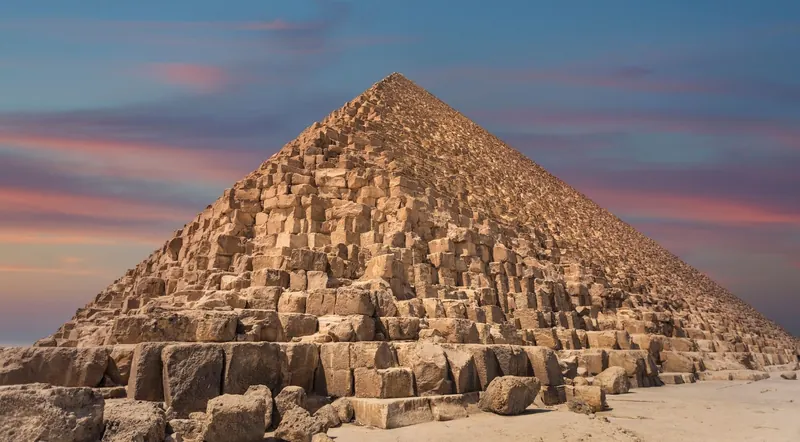
Yes, you can stand at the foot of the Great Pyramid and be back on your Hurghada sun-lounger the same day — but the Giza plateau you’ll arrive at in 2026 is a genuinely different place from the one in older guidebooks, with a new main gate, an electric shuttle system, no cars on the site, and the Grand Egyptian Museum finally open next door. This guide is the pyramid-focused companion to our broader Cairo day trip from Hurghada overview. It concentrates on two things: the mechanics of getting from the Red Sea to the Giza plateau specifically, and exactly what to expect once you’re standing on the sand.
The distance: how far is Hurghada from the pyramids?
The driving distance from Hurghada to Giza is roughly 450–470 km depending on your exact resort and destination point on the plateau. That is a serious distance — comparable to London to Newcastle — and it is the single fact that shapes every decision about this trip.
By road, realistic driving time is around 5.5 to 7 hours each way, not the optimistic “5 hours” some operators quote. The route runs north up the Red Sea coast to Zaafarana, then cuts inland across the Eastern Desert to the Nile Valley and into Greater Cairo. Add security checkpoints, comfort stops and Cairo’s notorious traffic and the door-to-door reality is longer than the raw kilometres suggest.
By air, the flight from Hurghada International Airport (HRG) to Cairo International Airport (CAI) takes around one hour. Flying is the difference between a punishing 18–20 hour day and a merely long one, and it is the option we recommend for anyone who can afford it — more on the trade-offs below.
Arriving at Giza is different from arriving in central Cairo
This matters and most guides gloss over it. Giza sits on the west/southwest edge of Greater Cairo, while the classic tourist “Cairo” (the old Egyptian Museum in Tahrir, Islamic Cairo) is across the river to the east. Cairo International Airport is in the northeast of the city. So if you fly in, you land on the opposite side of one of the most congested cities on earth and must cross it to reach the plateau — a transfer that can take anywhere from around 45 minutes in light traffic to well over an hour when the city is busy.
A road trip from Hurghada, by contrast, approaches the Nile Valley from the south/east and threads toward Giza on the western fringe. Either way, the final approach into the Giza/Haram district is where you’ll hit the densest traffic of the day.
What about Sphinx Airport (SPX)?
You may have read that Sphinx International Airport (SPX), west of Cairo near Giza, is far closer to the pyramids than CAI — and that’s true; it sits roughly 30–37 km from the plateau on the same side of the city, avoiding the cross-town crawl. Egyptian aviation authorities explicitly promoted SPX to “stimulate one-day tourist programs” and ease congestion at Cairo airport.
However, for a Hurghada day trip this is currently moot. There is no scheduled direct flight between Hurghada (HRG) and Sphinx (SPX) — flight-schedule databases show the route is operated by zero airlines, and SPX’s only current domestic route is to Abu Simbel. Every “Hurghada to pyramids by plane” day-trip operator we found flies into Cairo International (CAI) and transfers you across the city by road. Any cheap “HRG–SPX” fares you see on booking aggregators are connecting international routings (typically via Istanbul), not a practical domestic hop. If that changes, SPX would be a game-changer for fly-in day trips — flag it as one to re-check before booking, but don’t count on it.
Other Experiences You Might Enjoy
Once you’ve seen the plateau, there’s a lot more of Egypt and the Red Sea worth your time — a Nile felucca sail, the bazaars of Khan el-Khalili, the Step Pyramid at Saqqara, or, back in Hurghada, snorkeling and diving trips, desert quad safaris and boat excursions along the coast. Worth a browse if you have extra days either side of your Cairo trip.
A realistic Hurghada-to-pyramids timeline
By road (group coach): Pickup is brutally early — typically around 00:30–01:00. You’ll cross the desert through the small hours, reach Giza mid-to-late morning, and get roughly 2 hours on the plateau before lunch and (usually) the Grand Egyptian Museum. Return departure is late afternoon; you’re back at your Hurghada hotel somewhere around 21:00–23:00. Total elapsed time is often around 18–20 hours, most of it on the coach.
By air: A pre-dawn transfer to Hurghada airport, an early flight to Cairo, then the cross-city drive to Giza. You get onto the plateau in better shape, have more usable hours at the sites, and fly back in the evening. It is a long day, but a civilised one by comparison.
When tour groups arrive — and why it matters
Because of the drive, road-based groups from Hurghada tend to reach the plateau in the late morning, which is precisely the worst window: the large guided groups reliably arrive between 09:00 and 10:00, the site is busy, the desert sun is climbing, and the light is flat and hazy for photography. Independent guides consistently advise arriving at the 08:00 opening for cool air, thin crowds and the best light — an advantage that flying, or an overnight Cairo stay, buys you and a same-day coach largely cannot.
The Giza plateau in 2026: what has changed
The plateau is midway through a major redevelopment led by Orascom Pyramids Entertainment with the Ministry of Tourism and Antiquities. The headline changes:
- A new main entrance. The old gate near the Marriott Mena House has been replaced by “The Great Gate,” a new visitor centre on the Fayoum (Cairo–Fayoum) road on the south side of the plateau. It has ticket machines, security, a small exhibition, cafés, restrooms and lockers.
- The Sphinx Gate on the east side still operates as a pedestrian entrance, but it has no ticket office — you can only enter there with a ticket already bought online.
- No private cars or tour coaches on the plateau. This is the biggest single change. Vehicles are banned from the archaeological zone itself; a fleet of electric hop-on, hop-off shuttle buses now moves visitors between the main stops (the Great Pyramid, the panorama point, the Sphinx and so on), running at short intervals.
The shuttle system has drawn mixed reactions. Officials frame it as an anti-pollution, anti-chaos improvement, and many independent visitors find the site calmer and less hassled than before. But Egyptian tour guides have publicly criticised it: Hamdy Ezz, head of the Egyptian Tour Guides Syndicate, argued the system “reduces the tourists’ enjoyment of the sites and causes congestion at the new entrance,” and guide Hoda Radi noted the buses “do not wait; they leave every few minutes,” making it awkward to linger for photos or leave belongings. There is also a VIP option — a private electric golf-cart entrance with an air-conditioned lounge — bookable in advance through tour operators, which frees you from the shuttle timetable.
Verify the exact shuttle/access arrangements before you travel — this is an active redevelopment and details are still shifting.
Layout and orientation
The plateau covers a large area (over 500 acres). Oriented roughly, from the new southern entrance you have:
- The Great Pyramid of Khufu (Cheops) — the oldest and largest, and the only surviving wonder of the ancient world.
- The Pyramid of Khafre (Chephren) — appears tallest because it stands on higher ground and still keeps some of its original smooth limestone casing near the apex.
- The Pyramid of Menkaure (Mycerinus) — the smallest of the three.
- The Queens’ Pyramids — smaller satellite pyramids beside Khufu and Menkaure.
- The Great Sphinx, at the eastern end, guarding the causeway, with the well-preserved Valley Temple of Khafre immediately behind it (included in general admission — most visitors walk straight past it).
- The panoramic viewpoint in the desert to the south, the classic spot to photograph all three pyramids in a line.
How much walking, and the terrain
The plateau is big and the ground is sand, gravel and uneven ancient stone. With the shuttle you can minimise walking between the major stops, but you’ll still be on your feet on soft and uneven surfaces at each one. Independent visitors report the panorama point is roughly a 20–30 minute walk from the main entrance if you don’t take the shuttle or a camel. Allow 3 to 4 hours for the main circuit including the Sphinx; add 45 minutes if you’re entering a pyramid interior. Sturdy closed shoes are essential.
Opening hours
The site is open daily. The official Giza Plateau page (checked 11 October 2026) lists 08:00 to 16:00 every day, with no separate summer, winter or Ramadan schedule. During Ramadan closing times have been reported earlier, with last entry near 15:30. Ramadan moves about 11 days earlier each year: in 2026 it ran from 19 February to 19 March, and in 2027 it is expected to begin around 8 February. Some individual pyramid interiors close earlier than the main site, and hours can change; confirm close to your travel date. Last entry is well before closing, but arriving anywhere near last entry leaves far too little time — this is a morning trip.
Going inside the pyramids
You can go inside — on a separate ticket from the general plateau admission — and this is one of the most-asked questions about Giza. Here’s the honest version.
Inside the Great Pyramid (Khufu)
Entry is via the “Robbers’ Tunnel” on the north face. You clamber up the pyramid’s face a little, then crouch to enter. The route ascends a steep, low passage (you’ll be bent double, crouch-walking, for roughly 40–50 metres at around a 26° incline) before opening into the Grand Gallery — a genuinely awe-inspiring corbelled space about 47 m long and 8.5 m high, with precisely fitted ceiling blocks. At the top lies the King’s Chamber, a bare red-granite room containing only a lidless, empty granite sarcophagus.
Set your expectations correctly: the chambers are undecorated — no hieroglyphs, no gold, no mummy. What you’re paying for is the experience of moving through the interior of a 4,500-year-old monument and standing in the Grand Gallery, which stops most people in their tracks.
The physical demands are real. The passages are steep, narrow, hot and poorly ventilated, with wooden ramps and, at busy times, two-way foot traffic in a single cramped corridor. It is noticeably cooler than the plateau but the air is still and humid. Anyone with claustrophobia, significant back problems, heart or respiratory conditions, or limited mobility should not attempt it — there is no air conditioning, no wheelchair access and no easy bail-out once you’re committed. Reasonably fit, curious adults manage it fine.
Photography rules inside have tightened and are inconsistently applied — some visitors report smartphone photos are tolerated, others are told firmly to put cameras away. Don’t count on getting the Grand Gallery shot; treat it as something to experience rather than document.
The cheaper, quieter alternatives: Khafre and Menkaure
Here’s the tip most day-trippers miss. You can also enter the Pyramid of Khafre or (when open) the Pyramid of Menkaure, and these interior tickets are substantially cheaper and far less crowded than Khufu. Khafre’s interior offers a similar descending-passage-and-burial-chamber experience with an original corbelled ceiling, often with almost no queue. If you want the “inside a pyramid” experience without the Khufu crowds, price or claustrophobic bottleneck, Khafre is the smart pick — our inside the Great Pyramid guide weighs the two interiors side by side. A Queen’s pyramid is another quiet option. (Menkaure’s interior opens periodically rather than reliably — check on the day.)
Interior tickets sell out — this is critical for day-trippers
The Great Pyramid interior is capped daily — widely reported as 300 tickets, split into 150 released for a morning session and 150 for an afternoon session. In peak season (October–April) these sell out, sometimes well before a late-morning coach group even arrives. If entering Khufu specifically matters to you, either book ahead through the official Ministry portal (egymonuments.com) or choose a tour that pre-arranges interior access — a same-day road trip that reaches the plateau at 11:00 may find Khufu’s interior already gone. Verify current interior ticket limits and availability before booking.
The Solar Boat and the Sound & Light show
The Solar Boat (Khufu ship) has left the plateau. Khufu’s reconstructed 4,600-year-old cedar boat — long displayed in a purpose-built museum beside the Great Pyramid — was moved to the Grand Egyptian Museum, and the old Solar Boat Museum building on the plateau was dismantled (completed in late 2021), restoring the clean view of the pyramid’s southern face. So don’t expect to see the boat at Giza itself; it’s now at the GEM, where a second Khufu boat is being reassembled in public view as of late 2025. Verify the boat’s display status at the GEM before relying on it.
The Sound & Light show still runs most evenings at the plateau in multiple languages, roughly 45–60 minutes, staged in an open-air amphitheatre facing the Sphinx. Reviews are mixed — it’s atmospheric to see the monuments floodlit at night, but the narration is widely described as dated. Crucially for you: it is an evening event and is not feasible on a same-day trip from Hurghada. By showtime you’ll either be on the coach home or your flight will have you well clear of Giza. Skip it unless you’re staying overnight in Cairo. Confirm the show is running before planning around it.
Combining the pyramids with other sites in one day
The standard combination: Pyramids + Sphinx + GEM
The natural pairing in 2026 is the Giza plateau plus the Grand Egyptian Museum, which officially opened on 1 November 2025 after two decades of delays. The GEM sits only about 2 km from the plateau — the two are now linked by a landscaped pedestrian promenade (roughly 1.3 km, opened late 2025, walkable in about 20–25 minutes or via electric shuttle), and the short drive between them is only about 10 minutes.
The GEM houses over 100,000 artefacts, including the complete Tutankhamun collection — more than 5,300 objects from the boy king’s tomb, including his iconic death mask and royal regalia, displayed together for the first time since Howard Carter’s 1922 discovery. The smart sequencing is pyramids first thing (outdoor, hot, best in the cool morning), then GEM in the afternoon (air-conditioned, indoors) — starting at the museum and hitting the plateau at midday is the classic mistake. Read more in our Grand Egyptian Museum guide.
Saqqara and Memphis — realistic from Hurghada?
Saqqara (the Step Pyramid of Djoser, the world’s oldest large stone monument) and Memphis (Egypt’s first capital, with the colossal Ramses II statue and the Alabaster Sphinx) are wonderful, and they lie south of Giza. On a road-based day trip from Hurghada they are not realistically includable — the drive already consumes most of your day, and adding Saqqara and Memphis would leave you with mere minutes at each.
They become feasible only on a flight-based day trip, where the hours you save in the air can be spent on the ground. Several operators sell fly-in itineraries combining Giza with Saqqara and Memphis (and sometimes Dahshur). Even then it’s a packed day and something gives — usually depth at each site. If Saqqara matters to you, consider an overnight in Cairo rather than trying to cram everything into one same-day dash.
What gets sacrificed: road vs air
- Road trip: cheapest, but the plateau visit is squeezed to around 2 hours, you arrive at the worst time for crowds and light, interior tickets may be gone, and Saqqara/Memphis are off the table. The GEM is often included but rushed.
- Flight trip: more expensive, but you arrive fresher and earlier, get more usable time, and can realistically add Saqqara/Memphis or spend proper time at the GEM.
Our plane vs bus comparison covers the full cost/time trade-off. Always verify current pricing before booking, as fares and tour prices shift with season and fuel costs.
Practicalities specific to the plateau
Heat, shade, water and best months
There is virtually no shade on the plateau. From May to September the midday heat is punishing — by late morning in summer the exposed desert can be brutal. Carry 1.5–2 litres of water per person, wear a hat and high-SPF sunscreen, and plan to be off the open sand by early afternoon. The best months to visit are October to April, when days are warm rather than savage; December–January are the coolest but also the busiest. See our best time to visit guide.
Camel and horse rides — the honest picture
Camel-and-pyramid photos are iconic, and rides are offered around the panorama point. But you must go in with eyes open on two fronts.
Scams. Freelance handlers are notorious for bait-and-switch pricing: a cheap quote to get on, then a much larger demand to get the camel to kneel so you can get off — while you’re stranded metres in the air. Handlers may also falsely tell you the panorama point is unreachable on foot to force a ride (it isn’t). Never negotiate a ride with a random handler on the plateau. If you want the experience, book it through a reputable tour where the price is pre-agreed and your guide is present.
Animal welfare. This is a serious and legitimate concern. A PETA Asia undercover investigation, running since 2019, documented handlers “violently beat[ing] exhausted horses and camels who are used to haul tourists in the blistering heat and without shade.” As a result, more than 50 travel companies have stopped selling or promoting the rides — among them Airbnb (which dropped them in early 2025), Marriott, Abercrombie & Kent, Grand Circle Corporation, British Airways Holidays, easyJet holidays and Black Tomato. Egypt’s tourism ministry launched an “animal welfare at archaeological sites” programme in October 2024 (including vaccines and regular veterinary care), and has begun phasing out camel and horse rides on the plateau, replacing them with electric transport as part of the redevelopment. Many ethically-minded travellers now skip animal rides altogether — the quad-bike option below and the shuttle cover the same ground. If you do ride, choose an operator with a clear animal-welfare policy and report any mistreatment.
Quad bikes / ATVs
Quad-bike and ATV desert safaris operate in the desert zone surrounding the plateau (not inside the archaeological area, where they’re prohibited), giving panoramic pyramid views and a scam-free, pre-paid alternative to a camel. They’re widely sold with hotel pickup. Machines can be old and rides bumpy, so go slowly if you’re a first-timer, and confirm the actual riding duration before you pay.
Touts, hawkers and the “free gift” scam
The entrance area is one of the most aggressively touristic environments in Egypt (the site itself, once you’re through the gate, is much calmer). Expect:
- Fake ticket-checkers and “guards” claiming the entrance is closed or your ticket is wrong, steering you to a stable or a different gate. Ignore them; buy only at the official visitor centre or online.
- The “free gift” scam: someone presses a scarf, papyrus, scarab or headdress into your hand as a “welcome gift,” then demands payment. Hand it straight back, say nothing, and keep walking. Don’t accept anything placed in your hand.
- Unsolicited “guides” and photo-takers who expect payment.
The most effective defence is a firm “la, shukran” (no thank you), minimal eye contact, and — ideally — visiting with a licensed guide, whom the touts largely leave alone. Tourist police patrol the site if you need help.
Toilets, food and the famous KFC/Pizza Hut view
There are restrooms at the visitor centre and near the main monuments (carry small coins). The new visitor centre has cafés and kiosks. The internet-famous spot, though, is the KFC/Pizza Hut across the road from the Sphinx Gate: its upper terrace gives an unobstructed, gloriously incongruous view over the Sphinx and all three pyramids. It’s free, it’s a Giza rite of passage, and it’s worth ten minutes — though on a tight day-trip schedule you may not get the chance.
Photography: the best shots
- Sphinx + pyramid from the Sphinx enclosure (the Sphinx faces east, so morning light is best on its face).
- All three pyramids in a line from the panorama point south of the complex — the classic shot, best early morning or late afternoon.
- Forced-perspective shots (pinching the apex, “holding” a pyramid) work from the open desert areas.
- The KFC/Pizza Hut terrace for the cultural-clash shot.
Drones are effectively banned across Egypt without a high-level Ministry of Defence permit — bringing one risks confiscation. Tripods can attract a request for a permit or fee. Handheld phone and camera photography on the plateau is generally free. Never photograph soldiers, police or checkpoints.
Dress code and footwear
Dress modestly for a mix of cultural respect and sun protection: covered shoulders and knees are sensible, lightweight long sleeves help against sunburn. Footwear is the thing people get wrong — you need closed, sturdy shoes with grip for sand, gravel and uneven stone (and essential if you go inside a pyramid). Sunglasses and a wide-brimmed hat complete the kit.
Accessibility
Be realistic. The new visitor centre and main paved paths are wheelchair-friendlier than before, and many viewpoints and the shuttle stops are accessible, so wheelchair users can still get excellent views of the pyramids and Sphinx. But the plateau is fundamentally an ancient site of sand, gravel and uneven stone, and pyramid interiors are entirely inaccessible — steep, narrow passages with no accommodations. Travellers with limited mobility should plan a viewpoint-and-shuttle visit and skip the interiors.
Tour types and booking
What’s typically included — and excluded
A standard Hurghada-to-pyramids tour usually includes: hotel pickup and drop-off, round-trip transport (coach or flight), a licensed Egyptologist guide, general plateau and Sphinx entrance fees, and lunch. Commonly excluded: interior pyramid tickets (Khufu, Khafre, Menkaure), camel/horse/quad rides, drinks and tips, and any optional add-ons like a Nile boat trip. Read the inclusions carefully — “entrance fees” rarely means the interior.
Group coach vs private vs flight
- Group coach: cheapest, most social, longest and most tiring; least flexibility and the latest arrival at the plateau.
- Private road tour: more comfortable and flexible, you control the pace, but still a very long day on the road.
- Flight-based tour: the most expensive but by far the best use of your hours on the plateau — recommended if budget allows, and essential if you want to add Saqqara/Memphis or enter the Great Pyramid on a limited ticket.
Why a licensed Egyptologist guide is worth it
The plateau has limited signage and the monuments aren’t laid out in any obvious order. A licensed Egyptologist turns a walk past big stone triangles into a coherent story — construction techniques, the Old Kingdom context, the meaning of the Valley Temple and the Sphinx — and, just as importantly, shields you from touts, handles the shuttle logistics, and can pre-arrange scarce interior tickets. It materially improves the visit.
What to verify before booking
- Current plateau access and shuttle arrangements (an active redevelopment).
- Whether interior tickets are included or can be pre-arranged, and current daily limits.
- Exact inclusions/exclusions (interior, camel, lunch, drinks, tips).
- Whether it’s genuinely a flight trip or a long coach day.
- Recent, dated reviews and the operator’s licensing and animal-welfare policy.
- Current pricing — always confirm before booking, as tour and ticket prices change with season and fuel costs.
Book with confidence. Choose a Giza plateau tour with a licensed Egyptologist, transparent inclusions and strong recent reviews — and verify current plateau access, opening hours and interior-ticket availability before you pay.
FAQ
How far is Hurghada from the pyramids? Roughly 450–470 km by road — about 5.5 to 7 hours’ drive each way — or a one-hour flight from Hurghada (HRG) to Cairo (CAI), followed by a cross-city transfer to Giza.
Can you visit the pyramids from Hurghada in one day? Yes. It’s done daily by coach (an 18–20 hour day) or, more comfortably, by air. Flying gives you far more usable time on the plateau; the coach is cheaper but exhausting.
Is a day trip to the pyramids from Hurghada worth it? For most people, absolutely — the pyramids are a bucket-list wonder and this may be your only chance. But be honest about the trade-off: a coach day is dominated by driving with only about 2 hours on site. If you can, fly, or build in an overnight in Cairo.
Can you go inside the pyramids? Yes, on a separate ticket. The Great Pyramid’s interior is steep, cramped, hot and undecorated — awe-inspiring for the fit and curious, unsuitable for anyone with claustrophobia, back, heart or breathing problems. Khafre’s interior is cheaper and much quieter.
Do I need to book interior tickets in advance? For the Great Pyramid, ideally yes — daily numbers are capped at 300 (150 for a morning session, 150 for the afternoon) and sell out in peak season, often before late-arriving coach groups reach the plateau. Book online via the official portal or via a tour that pre-arranges access.
Is it better to fly or take the bus from Hurghada? Fly if you can. The flight is about an hour versus 5.5–7 hours by road each way, and it transforms the quality of the day. The bus wins only on price. See our plane vs bus guide.
Can I see the Grand Egyptian Museum on the same trip? Yes — the GEM is about 2 km from the plateau, linked by a pedestrian promenade, and it’s the standard afternoon pairing. Do the pyramids first (cool morning), the air-conditioned museum after.
Can I ride a camel at the pyramids, and should I? You can, but only book through a reputable tour with a pre-agreed price — freelance handlers run aggressive scams. Note that Egypt is phasing out plateau rides over animal-welfare concerns; many travellers now prefer a quad bike or simply the shuttle.
Is the Solar Boat still at Giza? No. Khufu’s boat was moved to the Grand Egyptian Museum and the old Solar Boat Museum on the plateau was demolished. You’ll see the boat at the GEM, not at Giza.
Is the Sound & Light show doable on a day trip from Hurghada? No. It’s an evening event, and you’ll be travelling back by then. It’s only realistic if you stay overnight in Cairo.
What should I wear and bring? Sturdy closed shoes, a hat, sunglasses, high-SPF sunscreen, 1.5–2 litres of water, some small cash, and modest, lightweight clothing. There’s almost no shade.
Are the pyramids safe to visit? Yes. The main hazards are touts and scams at the entrance, not physical danger. A licensed guide, buying tickets only officially, and a firm “no thank you” handle nearly all of it.
See the Pyramids of Giza — One Full Day from Hurghada
Join 7,000+ travelers who rated this Cairo day trip 4.6/5. Hotel pickup, air-conditioned transport, an expert Egyptologist guide, and lunch are all included. Free cancellation up to 24 hours before you go.
Check Availability & Book