One Day in Cairo: A Realistic Itinerary
How to plan one day in Cairo without wasting it in traffic — realistic hour-by-hour itineraries, travel times between sites, and what to cut. 2026 guide.
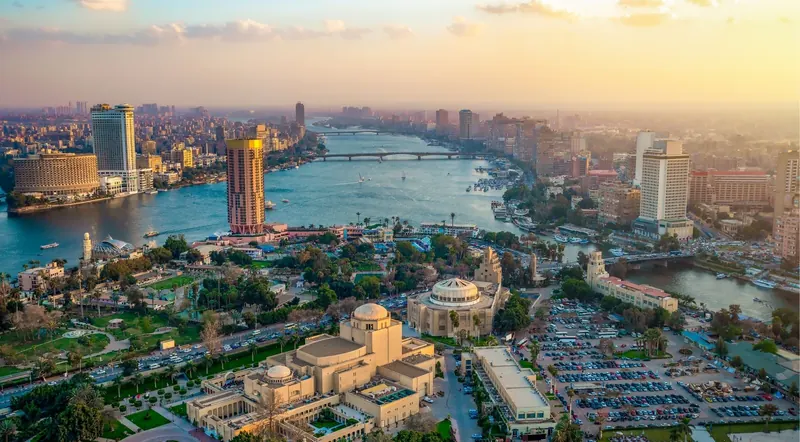
One day in Cairo is enough to see the headline acts — the Pyramids of Giza, the Sphinx and the Grand Egyptian Museum — but only if you accept from the outset that you cannot see the whole city, and plan your hours around Cairo’s single most punishing variable: traffic. The mistake almost everyone makes is treating Cairo like a compact European capital where you can string five sights together in an afternoon. It is not. The Greater Cairo Metropolitan Area holds close to 20 million people — the World Bank counted more than 19 million and projects 24 million by 2027 — spread across two governorates, and the distance between its tourist zones is measured in lost hours, not kilometres. This guide gives you several honest, hour-by-hour itineraries built around real travel times, and tells you plainly what to cut.
If you are coming from the Red Sea coast, read this alongside our Cairo day trip from Hurghada pillar guide and the plane vs bus comparison, because how you arrive determines almost everything about how much of this you can actually do. Tour prices and departure times change constantly, so check live availability for your date before you build a day around one.
TL;DR
- Yes, one day in Cairo is enough for the essentials — Pyramids of Giza + Sphinx in the morning and the Grand Egyptian Museum in the afternoon — but it is not enough to add Islamic Cairo, Coptic Cairo or the old Egyptian Museum on the same day. Pick one geography and commit to it.
- Traffic, not opening hours, is your real constraint. Crossing Cairo at rush hour (roughly 7–10am and 4–8pm) can double or triple journey times, so the winning strategy is to cluster sites that are close together and avoid crossing the city mid-day.
- From Hurghada, fly if you possibly can. A road day trip is a 16-plus-hour marathon that leaves only a few hours in Cairo; the one-hour flight roughly doubles your time at the monuments. Verify current pricing before booking either option.
Key Findings
- The Grand Egyptian Museum (GEM) held its official inauguration on 1 November 2025 and opened to the general public on 4 November 2025 after two days of dignitary tours. It is now the anchor of any Cairo day. It sits on the Giza plateau, roughly a 5–10 minute drive from the Pyramids, which means the two flagship sights are finally in the same geographical zone — a huge planning advantage.
- GEM operates online-only, timed-entry ticketing via its official site. On-site sales effectively ended in December 2025. This is a hard requirement, not a suggestion: no pre-booked slot, no entry.
- The complete Tutankhamun collection is included in the standard GEM admission ticket — there is no separate Tutankhamun ticket. The timed slot governs only when you may enter, not how long you stay.
- The old Egyptian Museum in Tahrir Square is still open, but it no longer holds the royal mummies (now at NMEC) or the full Tut collection (now at GEM). Don’t try to do both big museums in one day.
- Cairo Metro Line 4, which will eventually put a station at the Pyramids and the GEM, is not yet operational — its first phase is scheduled to open in the first half of 2028. Do not plan a 2026 or 2027 visit around it.
- Ramadan in 2026 began on 19 February (Egypt’s moon-sighting committee declared it a day after Saudi Arabia’s 18 February) and ended on 19 March, with Eid al-Fitr on Friday 20 March and a public holiday from 19 to 23 March. Ramadan moves about 11 days earlier each year, and in 2027 it is expected to begin around 8 February, depending on the moon sighting. Through that window, site hours can be shortened across the city and daytime traffic spikes before the sunset iftar.
Other Experiences You Might Enjoy
Traffic is the reason one day forces a choice — and it is also the reason a second day pays for itself. Beyond the Pyramids of Giza and the Grand Egyptian Museum, the city holds the Citadel of Saladin, the lantern-lit Khan el-Khalili bazaar, Coptic Cairo’s Hanging Church, the royal mummies at NMEC, felucca sails on the Nile, and — further out — Saqqara, Memphis and Alexandria. From the Red Sea coast, Luxor and the Valley of the Kings are their own day out. Our guide to everything else Cairo has to see covers each of these sights district by district.
Understanding Cairo’s Geography — The Critical Planning Factor
Before any itinerary makes sense, you need a mental map of where Cairo’s tourist zones actually sit, because the entire art of planning one day here is minimising the time you spend crossing between them.
There are, broadly, six zones:
- Giza plateau & the Grand Egyptian Museum (far west/south-west). The Pyramids, the Sphinx and now the GEM. This is where most first-timers spend the bulk of their day.
- Downtown & Tahrir Square (centre). The old Egyptian Museum, the Nile Corniche, and the beating administrative heart of the city.
- Islamic Cairo (east). The Citadel of Saladin with the Mosque of Muhammad Ali, Khan el-Khalili bazaar, Al-Muizz Street and the great medieval mosques.
- Coptic Cairo / Old Cairo / Fustat (south). The Hanging Church, Ben Ezra Synagogue, Abu Serga, and — crucially — the National Museum of Egyptian Civilization (NMEC) with the Royal Mummies Hall.
- Zamalek (island). The leafy Nile island district, good for restaurants and the Cairo Tower.
- Saqqara & Memphis (far south, well outside the city). The older necropolis, roughly an hour’s drive beyond Giza.
And two logistical points that anchor the map: Cairo International Airport sits north-east of the centre, and the Pyramids sit at the opposite, south-western corner — meaning the airport-to-Giza run is the longest single transit most day-trippers will face.
How bad is Cairo traffic, really?
Bad enough that it should dictate your whole plan. The World Bank’s Cairo Traffic Congestion Study found that “average speeds on major corridors are at least half (15–40km/h) the normally expected speeds (60–80km/h),” and advised that “when making a trip during peak hours, one should expect at least double the normal travel time.” (The same study put the annual cost of the city’s congestion at up to EGP 50 billion — around USD 8 billion, or roughly 4% of Egypt’s GDP.) Locals and drivers consistently flag the morning rush at roughly 7–10am and an evening rush that stretches from about 4pm to 8pm. Fridays — the start of the Egyptian weekend — are noticeably quieter on the roads during the day, though they bring their own complication with midday prayers.
The practical upshot: a journey that a mapping app promises in 20 minutes off-peak can genuinely take an hour in the thick of it. Build every itinerary so that your longest cross-city moves happen outside those windows, or not at all.
Realistic travel times between Cairo’s tourist zones
These are driving times by car or ride-hailing. The lower figure is a clear-road, off-peak reality; the higher figure is what you should budget in or near rush hour. Verify against live traffic on the day — Cairo does not reward optimism.
| From → To | Off-peak | Peak / budget for |
|---|---|---|
| Giza / GEM → Egyptian Museum (Tahrir) | 20–30 min | 45–60 min |
| Giza / GEM → Citadel (Islamic Cairo) | 40–50 min | 60–90 min |
| Giza / GEM → Khan el-Khalili | 40–55 min | 60–90 min |
| Giza / GEM → Coptic Cairo / NMEC | 30–40 min | 50–75 min |
| Pyramids → Grand Egyptian Museum | 5–10 min | 10–15 min |
| Egyptian Museum (Tahrir) → Khan el-Khalili | 15–20 min | 30–40 min |
| Citadel → Khan el-Khalili | 10–15 min | 20–30 min |
| Coptic Cairo/NMEC → Citadel | 15–20 min | 30–40 min |
| Cairo Airport → Giza / Pyramids | 45–60 min | 75–120 min |
| Cairo Airport → Downtown / Tahrir | 45–60 min | 60–75 min |
| Giza → Saqqara | 45–60 min | 60–75 min |
| Saqqara → Memphis | 15–20 min | 20–30 min |
The single most important line in that table is the top one — the crossing between the Giza zone and the Downtown/Islamic/Coptic zones. That crossing is what breaks most over-ambitious itineraries. Do it once, at most, in a single day, and never at rush hour.
The Metro, ride-hailing and walking
The Cairo Metro is fast, air-conditioned on newer lines, dirt cheap and — critically — immune to road traffic. Line 2 runs to Giza station, from which you still need a taxi or microbus to reach the plateau. Line 1 stops at El-Malek El-Saleh and Mar Girgis (the latter drops you right at Coptic Cairo, the single most Metro-friendly tourist stop in the city). Line 3 now reaches the airport. But the Metro does not go directly to the Pyramids or the GEM, and for a one-day visitor juggling a tight schedule the last-mile transfers usually make a private car or ride-hail more practical. The long-awaited Line 4, which will finally connect the Pyramids and GEM to the network, is still under construction; the National Authority for Tunnels confirmed in April 2026 that its first phase — including the new Pyramids station — is scheduled to open in the first half of 2028. So it is irrelevant to your 2026 or 2027 trip. Verify Metro Line 4 status before relying on it.
Ride-hailing is the default for visitors and the single best tool for getting around Cairo. Uber, Careem (the homegrown competitor Uber owns but runs separately) and inDrive all operate widely in Cairo. Fixed, upfront pricing removes haggling; GPS removes the “scenic route” problem. Both Uber and Careem generally accept international cards, though some drivers prefer cash — carry Egyptian pounds as backup. Expect surge pricing during peak hours and after late flight arrivals.
Walking between tourist zones is not realistic — the distances are large and the roads hostile to pedestrians. Walking within a zone, however, is not only realistic but essential: the medieval lanes of Islamic Cairo and the compact churches of Coptic Cairo are best explored on foot, and inside the Giza plateau you will do plenty of walking between monuments.
The Candidate Sites — What’s Worth Your Hours
Giza plateau (Pyramids + Sphinx)
The reason you came. The plateau holds the three great pyramids, the Sphinx, several smaller queens’ pyramids and viewpoints. Allow 2.5–4 hours for a proper circuit including the Sphinx and the panoramic viewpoint; add time if you go inside a pyramid (covered in our Inside the Great Pyramid guide). The plateau is open daily; the official schedule lists 08:00 to 16:00 every day, and hours can be shorter during Ramadan. Go at opening — for the light, the cooler air and the thinner crowds. For plateau layout, the Great Gate entrance, the shuttle, camel touts and photography, see our Giza Plateau guide and the Hurghada to the Pyramids of Giza day trip guide. Combined pyramid-and-Sphinx logistics are covered in Pyramids and Sphinx combined tours.
Grand Egyptian Museum (GEM)
The world’s largest museum devoted to a single civilization, on the Giza plateau within a few minutes of the Pyramids. It holds more than 100,000 ancient Egyptian artefacts, the complete Tutankhamun collection — over 5,400 pieces shown together for the first time, many never previously displayed — the Grand Staircase and Khufu’s Solar Boat. Booking is online-only and timed — do it in advance via the official channel or a reputable platform. Allow 3–4 hours for a focused visit of the highlights plus Tutankhamun; enthusiasts can happily spend 5–6 hours or a full day. Galleries generally open 09:00–18:00, with extended evenings until later on Wednesdays and Saturdays, and reduced Ramadan hours. Tutankhamun is included in standard admission. Verify current GEM hours, booking rules and pricing before your visit.
Egyptian Museum, Tahrir Square
The grand old museum of 1902, dense, atmospheric and slightly chaotic. Since the royal mummies moved to NMEC (2021) and the Tutankhamun collection moved to GEM, it is no longer the single must-see it once was — but it still holds an enormous collection and retains a unique “attic of treasures” character. Allow 1.5–2.5 hours. The ministry has indicated the Tahrir museum will remain open, with a phased renovation planned later in the decade. Don’t pair it with the GEM in a single day — that is the classic “two big museums” mistake. See our Egyptian Museum vs GEM comparison.
National Museum of Egyptian Civilization (NMEC)
In Fustat (Old Cairo), this modern, well-lit, air-conditioned museum tells the whole sweep of Egyptian history and — its crown jewel — houses the Royal Mummies Hall. Per NMEC’s own account, the hall displays 20 royal mummies (18 kings and 2 queens, from the 17th to the 20th dynasty) out of the 22 moved during the 2021 Pharaohs’ Golden Parade, including Ramesses II, Thutmose III, Seqenenre Taa II and Hatshepsut. This is the only place to see the royal mummies. Allow 1.5 hours for the mummies hall and main gallery, 2–3 hours for the full museum. Open daily 09:00–17:00 (last entry around 15:00), with Friday evening hours and reduced Ramadan hours. Photography is banned in the mummies hall. It pairs naturally with Coptic Cairo, which is next door.
The Citadel of Saladin & the Mosque of Muhammad Ali
Cairo’s medieval fortress on the Muqattam hills, crowned by the Ottoman-era alabaster Mosque of Muhammad Ali and offering the best panorama of the city. The Citadel grounds open roughly 08:00–17:00; the mosque is closed to visitors during the five daily prayers and, importantly, during Friday midday prayers (roughly 11:30–14:00). Allow 60–90 minutes for the mosque and terrace, or 2.5–3 hours for the whole complex including its museums. Dress modestly; shoes off inside the mosque.
Khan el-Khalili bazaar & El Fishawy café
Cairo’s great medieval market, a warren of lanes selling spices, gold, copper, lanterns and souvenirs. The famous El Fishawy café — open, by its own account, since the 18th century — is the place for mint tea and shisha amid battered mirrors. The bazaar is at its most atmospheric after dark, when the lanterns are lit; mornings (after about 11am) are calmer for shopping. Many shops pause during Friday midday prayers. Allow 1.5–3 hours for a browse and a tea, longer to combine with Al-Muizz Street.
Al-Muizz Street & Islamic Cairo
The world’s most concentrated open-air museum of medieval Islamic architecture, running north from Khan el-Khalili. Best walked in the late afternoon into evening, when the stonework is floodlit and the heat has dropped. This is a walking experience — allow 1–2 hours on top of the bazaar. If you are basing yourself in Cairo for a second day, the Old Cairo Cultural Tour covering both the Islamic and Coptic quarters (from $71, rated 4.7★ by 1,073 travellers) packages the two zones with a guide and lunch.
Coptic Cairo: the Hanging Church, Ben Ezra Synagogue, Abu Serga
A compact, walkable cluster of some of the oldest Christian sites in the world, plus a historic synagogue, all within the Roman fortress of Babylon in Fustat. Churches and the synagogue are generally open 09:00–17:00 (the synagogue closed Fridays), free to enter except the Coptic Museum. Allow 2–3 hours for the full quarter. Reachable directly by Metro (Mar Girgis station).
Saqqara, Memphis & Dahshur
The older necropolis south of Giza. Saqqara’s Step Pyramid of Djoser is the world’s oldest stone pyramid; Memphis is a modest open-air museum with the colossus of Ramses II; Dahshur has the Bent and Red Pyramids. These sites open around 08:00. Together they are a half-day (4–6 hours including transfers) — genuinely rewarding, far less crowded than Giza, but not compatible with a full Giza-plus-museum day. If you are already in Cairo, the Giza, Sphinx, Saqqara & Memphis day tour (from $78, rated 4.7★ by 3,716 travellers) is the standard way to combine them, though it pairs Saqqara and Memphis with Giza rather than Dahshur. For the Dahshur version — an hour at the Bent Pyramid and 45 minutes at the Red Pyramid, both interiors covered by site entry — book the Saqqara, Memphis and Dahshur day trip (rated 4.7★ by 366 travellers) instead.
The Nile: feluccas, dinner cruises, the Corniche
A short felucca sail (traditional sailboat, roughly an hour) is the single best-value way to decompress from the city’s intensity, especially at sunset. Dinner cruises with a buffet and a folklore/belly-dancing show typically sail in the evening for around two hours and are an easy, atmospheric way to end a long day. Neither eats into your daytime sightseeing.
Cairo Tower & Al-Azhar Park
The Cairo Tower on Zamalek gives a 360-degree panorama and is best at sunset. Al-Azhar Park, a landscaped green space on the eastern edge of Islamic Cairo, offers one of the finest views back over the medieval city and the Citadel, with restaurants for lunch or an evening meal. Both are “bonus” sights — lovely if you have an overnight, skippable on a single day.
Newly opened in 2025–2026
The headline change is the full opening of the GEM in November 2025, which has reorganised how everyone plans a Cairo day. Confirm any other recently opened galleries or sites close to your travel date, as Cairo’s museum landscape is in active flux.
Sequencing Principles
A handful of rules turn a scattershot list into a workable day:
- Outdoor sites in the morning, indoor sites in the afternoon. Do the Giza plateau at opening — the light is best for photography, the crowds are thinnest and the heat is bearable. Save the air-conditioned GEM for the hot middle and afternoon of the day. Reversing this leaves you crossing the exposed plateau at noon and arriving at the museum tired.
- Cluster by geography; cross the city at most once. The GEM-plus-Pyramids day is so effective precisely because both are in the same zone. Any plan that hops Giza → Downtown → Islamic Cairo → Coptic Cairo in one day will spend more time in the car than at the sights.
- Respect Friday prayers. Mosques (including the Muhammad Ali Mosque at the Citadel) close to visitors during Friday midday prayers, roughly 11:30–14:00, and many bazaar shops pause too. Roads, however, are lighter on Fridays — a genuine trade-off.
- Plan around Ramadan. During Ramadan, sites close earlier, many daytime cafés and restaurants shut until sunset, and traffic becomes ferocious in the hour or two before iftar as the whole city races home to break its fast. Aim to be off the roads at dusk during Ramadan.
- Some combinations are simply impossible. Giza plateau + GEM + Egyptian Museum + Khan el-Khalili in one day is not a realistic itinerary; it is a recipe for seeing everything through a car window. Choose.
Itinerary Variant A — The Classic First-Timer’s Day (Pyramids + Sphinx + GEM)
This is the default, and the right choice for the vast majority of one-day visitors, including day-trippers from Hurghada. Everything is in the Giza zone, so you cross the city zero times.
- 08:00 — Arrive at the Great Gate, Giza plateau. Straight in at opening for the best light and the thinnest crowds.
- 08:00–11:00 — Pyramids and Sphinx. Walk the circuit: the Great Pyramid, the panoramic viewpoint for the classic three-pyramid shot, then down to the Sphinx. Add time here if you have booked to go inside a pyramid.
- 11:00–11:30 — Transfer to the GEM (5–15 minutes) with a break for water and a rest.
- 11:30–12:30 — Lunch near the GEM or at one of its cafés, before the galleries.
- 12:30–16:30 — Grand Egyptian Museum. Enter on your pre-booked timed slot. Head to the Tutankhamun galleries first, before the afternoon tour-group surge, then the Grand Staircase, Khufu’s Solar Boat and the main galleries.
- 16:30 onward — Depart. Optional sunset felucca on the Nile on the way back if your schedule allows.
What you cut: everything east and south — Islamic Cairo, Coptic Cairo, the old Egyptian Museum. That is the correct trade. This is the one day that feels unhurried rather than frantic.
If you are already staying in Cairo or Giza, this exact day is sold as a single package: Cairo: Grand Egyptian Museum, Pyramids, Sphinx Tour & Lunch (from $84, rated 4.8★ by 5,051 travellers) bundles hotel pickup, an Egyptologist guide, lunch and general admission to both the Pyramids–Sphinx area and the GEM.
Itinerary Variant B — The Ancient Egypt Maximalist (Giza + Saqqara + Memphis)
For the traveller who wants pyramids over museums and older sites over crowds. Note this variant sacrifices the GEM.
- 07:30 — Depart for Saqqara (furthest-but-one; roads quiet early).
- 08:15–10:30 — Saqqara. The Step Pyramid complex, the Mastaba of Ti and, for enthusiasts, the Serapeum.
- 10:30–11:00 — Transfer to Memphis.
- 11:00–11:45 — Memphis open-air museum (the Ramses II colossus; a quick stop).
- 11:45–12:45 — Transfer to Giza and lunch.
- 12:45–16:00 — Giza plateau: Pyramids and Sphinx.
- 16:00 — Depart.
What you cut: the GEM and all of central/eastern Cairo. Ambitious travellers sometimes bolt Dahshur onto the start of this day, but that pushes it to a very full 8-plus hours.
Itinerary Variant C — The Cairo City Day (for those who’ve already seen the Pyramids)
For repeat visitors, or anyone who wants the living city rather than the ancient one. This day stays in the eastern and southern zones.
- 09:00 — Coptic Cairo. Start at the Hanging Church, then Abu Serga, the Ben Ezra Synagogue and the Coptic Museum. (Arrive by Metro to Mar Girgis if you like.)
- 11:00 — NMEC (next door in Fustat): the Royal Mummies Hall and the main timeline gallery.
- 12:30 — Lunch, then transfer to the Citadel.
- 13:30–15:30 — Citadel of Saladin & Mosque of Muhammad Ali (avoid Friday midday), with the city panorama.
- 15:30 — Transfer to Islamic Cairo.
- 16:00–19:00 — Khan el-Khalili, El Fishawy café and the Al-Muizz Street walk as the lanterns come on.
What you cut: Giza entirely. This is a wonderful day, but it is a different day from the Pyramids — don’t try to fuse them. A guided version such as the Old Cairo walking tour with street food (from $27, rated 4.7★ by 1,516 travellers) is a cheap way to get the lanes and the eating right without navigating them cold.
Itinerary Variant D — The Flight-Based Hurghada Day Trip
Flying transforms the Hurghada day trip from an endurance test into a genuinely good day out. The flight is about an hour each way versus five to seven hours by road. This is a realistic hour-by-hour skeleton; exact flight times vary, so verify current schedules and pricing before booking.
- 04:30 — Hotel pickup in Hurghada for an early flight.
- 06:00–07:00 — Fly HRG → CAI.
- 07:00–08:15 — Land, meet guide/driver, transfer toward Giza.
- 08:30–11:30 — Pyramids and Sphinx.
- 11:30–12:30 — Lunch near Giza.
- 12:30–16:00 — Grand Egyptian Museum (pre-booked slot).
- 16:00–17:15 — Transfer back to Cairo airport (leave a generous buffer for traffic).
- 17:15–19:00 — Check-in and fly CAI → HRG.
- ~20:30 — Back at your Hurghada hotel.
That is a long day, but a rewarding one, with roughly seven hours on the ground and the two flagship sights done properly. Two ready-made versions of exactly this day run from Hurghada: Hurghada: Cairo Day Trip by Flight, Pyramids, Sphinx & Museum (from $273, rated 4.9★ by 4,048 travellers — its itinerary runs Giza plateau, museum and Khan el-Khalili, with Giza and Sphinx entrance fees included) and Hurghada: Full-Day Trip to Cairo by Plane (from $265, rated 4.8★ by 458 travellers, with a choice between the Grand Egyptian Museum and the Tahrir museum). Read our breakdowns on the flight tour page and the by-plane tour page, and see the plane vs bus breakdown for the full comparison.
Itinerary Variant E — The Road-Based Hurghada Day Trip
This is the honest version. A round trip by road is roughly 900km and 10–14 hours of driving, wrapped around whatever time is left in Cairo. It is cheaper, and some travellers prefer to avoid flying, but be clear-eyed about the maths.
- 00:00–01:00 — Hotel pickup in Hurghada (yes, after midnight).
- 01:00–06:30 — Drive to Cairo (5–6.5 hours, with a rest stop).
- 06:30–07:30 — Arrive Giza, breakfast/comfort stop.
- 07:30–10:30 — Pyramids and Sphinx.
- 10:30–13:30 — Grand Egyptian Museum (a compressed visit) and lunch.
- 13:30 — Begin the drive back to reach Hurghada before or around midnight.
What you cut: any margin for error. A single bad traffic day or a late start eats directly into your already-thin sightseeing window. On a road day trip, adding Khan el-Khalili or the Citadel to Giza is effectively impossible — the cross-city transfers don’t fit. This is why we steer Hurghada readers toward the flight; see the Cairo day trip from Hurghada pillar. If budget rules the decision, the by-road versions to compare are From Hurghada: Cairo & Giza Highlights Day Tour (from $76, rated 4.6★ by 7,243 travellers — the most-booked option on this site) and Hurghada to Cairo: Pyramids & Museum for First-Time Visitors (from $86, rated 4.8★ by 1,510 travellers, small-group, with an overnight coach leg).
Itinerary Variant F — Two Days in Cairo
If you can stay overnight, a second day unlocks the entire living city that Variant A forces you to skip. This is the itinerary we’d genuinely recommend to anyone with the flexibility.
Day 1 — Ancient Egypt (Giza zone): Pyramids and Sphinx in the morning, GEM in the afternoon — exactly as Variant A, but unhurried. Optional sunset felucca or a Nile dinner cruise in the evening.
Day 2 — The living city: Coptic Cairo and NMEC in the morning; the Citadel and Mosque of Muhammad Ali early afternoon; Khan el-Khalili, El Fishawy and the Al-Muizz Street walk in the evening. Slot the old Egyptian Museum in Tahrir into the morning instead of NMEC if pharaonic artefacts interest you more than the mummies.
Two days is the sweet spot for Cairo. A third day would add Saqqara, Memphis and Dahshur without cutting anything else. For search-driven planners: yes, a “Cairo 2 day itinerary” is where the city stops feeling like a race. Our survey of Cairo day trips and excursions ranks what to do with that second and third day.
Itinerary Variant G — The Airport Layover (6–12 hours)
If you are transiting through Cairo with a long layover, a quick Pyramids dash is feasible — but only with a comfortable time buffer. Given the airport sits at the opposite corner of the city from Giza (budget 45–120 minutes each way depending on traffic), you realistically need at least 7 hours between flights to make it worthwhile, and you should pre-book a transfer or tour with airport pickup so you’re not improvising.
- On landing — clear immigration (have your visa/eVisa sorted in advance to save time).
- Meet pre-booked driver/guide → transfer to Giza (1–2 hours).
- Pyramids and Sphinx (2–2.5 hours). Add the GEM only if you have 10-plus hours and a booked slot.
- Transfer back to the airport (1–2 hours) with a large buffer.
- Re-clear security with at least three hours before your onward flight.
Do not attempt this with a tight layover — Cairo traffic has ended more than one connection.
What to Cut, and Why
The hardest part of planning one day in Cairo is subtraction. Three honest cuts:
- The “three museums in one day” mistake. The GEM, the old Egyptian Museum and NMEC are all superb — and trying to do more than one properly in a day is self-defeating. Each deserves 2–4 hours, and they sit in different zones. Pick one: GEM if you want scale and Tutankhamun, NMEC if you want the mummies, Tahrir if you want old-school atmosphere and sheer density of artefacts.
- Khan el-Khalili plus Giza in one day (from Hurghada). The bazaar is in eastern Cairo; Giza is in the far west. Linking them means the dreaded cross-city transfer, twice, on a day where you have no spare hours. On a Hurghada day trip specifically, it doesn’t fit — save the bazaar for an overnight stay.
- The Citadel as an afterthought. It’s a 60–90 minute visit plus a long transfer from Giza. It belongs in a Cairo-city day (Variant C or Day 2), not tacked onto a Pyramids day.
Practical Day-Management
Lunch. Eat near where you already are — around Giza/GEM on a Pyramids day, or in Islamic/Coptic Cairo on a city day — rather than crossing town for a restaurant. A mid-day meal also conveniently parks you indoors during the hottest, most traffic-clogged part of the day. The GEM has its own cafés and restaurant.
Prayer times and closures. Mosques close to visitors during the five daily prayers (about 30 minutes each) and for longer at Friday midday. Plan mosque visits around these windows, especially on Fridays.
Toilets, water, rest. The GEM and NMEC have modern, clean facilities and air conditioning — use them as reset points. Facilities at the Giza plateau and older sites are more basic; carry your own water (at least 1.5 litres per person in summer) and some tissue. Saqqara in particular has limited food and water on site.
Managing energy. A Cairo day — especially from Hurghada — is genuinely long. Front-load the physically demanding, heat-exposed sights (Giza) and back-load the sit-down, air-conditioned ones (GEM, a felucca, a dinner cruise). Don’t schedule your last activity too tightly against your flight or return drive.
Photography timing. The light at Giza is best early morning and late afternoon; the harsh midday sun (roughly 11am–3pm) flattens the pyramids and bakes the plateau. Morning arrival gives you both the best photos and the coolest walking. The classic three-pyramid panorama is shot from the desert viewpoint, not from directly beneath the Great Pyramid.
Booking Your Day
Because the GEM now requires a pre-booked timed entry and the best Giza experiences (skip-the-line entry, licensed Egyptologist guides, hassle-free transfers) sell out in peak season, book ahead rather than improvising on the day. If you’re coming from the coast, a well-run Cairo day trip from Hurghada bundles the flight or drive, transfers, guide and tickets into one booking — which removes almost all of the logistical risk this article describes. Compare options in our guide to choosing the right Cairo Pyramids tour and across every Cairo day trip on this site, and always verify current pricing and inclusions before booking.
FAQ
Is one day enough for Cairo?
For the essentials — Pyramids, Sphinx and the Grand Egyptian Museum — yes, one day is enough, provided you keep to the Giza zone and don’t try to add the city’s eastern and southern sights. To see Islamic Cairo, Coptic Cairo and the museums as well, you need at least two days.
Can you see the Pyramids and the Egyptian Museum in one day?
Yes — but be clear about which museum. The Pyramids pair perfectly with the Grand Egyptian Museum, because both are in the Giza zone, minutes apart. Pairing the Pyramids with the old Egyptian Museum in Tahrir means a cross-city transfer and is less efficient now that the GEM holds Tutankhamun.
How long do you need at the Grand Egyptian Museum?
Allow 3–4 hours for a focused visit of the highlights plus the Tutankhamun galleries. Enthusiasts can spend 5–6 hours or a full day across all twelve main galleries. Book a timed slot in advance — entry is online-only.
Do you need a separate ticket for the Tutankhamun galleries at the GEM?
No. The complete Tutankhamun collection is included in the standard GEM admission ticket. Your timed slot controls when you enter, not how long you stay or what you can see.
What’s the best order to see Cairo’s sights?
Outdoor and heat-exposed sites (Giza) first thing in the morning; indoor, air-conditioned sites (the GEM, museums) in the afternoon. Cluster everything by geography and cross the city at most once.
Is Cairo traffic really that bad?
Yes. The World Bank found peak-hour journeys should be budgeted at at least double the off-peak time, with average speeds on major roads running at roughly half the expected rate. The mornings (about 7–10am) and late afternoons/evenings (about 4–8pm) are worst. Plan your longest transfers outside those windows.
Can you do a Cairo day trip from Hurghada in one day?
Yes, and it’s a popular trip. Flying (about an hour each way) is far more comfortable and gives you roughly seven hours in Cairo; the road option is a 16-plus-hour day with only a few hours at the sites. See our plane vs bus comparison.
Is the old Egyptian Museum still worth visiting now that the GEM has opened?
Yes, if you have the time — it remains a dense, atmospheric collection with genuine character. But it’s no longer essential on a one-day trip, and you shouldn’t try to visit both it and the GEM in the same day.
Where are the royal mummies now?
At the National Museum of Egyptian Civilization (NMEC) in Fustat, in the Royal Mummies Hall — not at the GEM and not at the old Egyptian Museum. This is the single most common source of planning confusion.
Is the Cairo Metro useful for tourists?
For some journeys, yes — it’s fast, cheap and beats traffic, and it drops you right at Coptic Cairo (Mar Girgis). But it doesn’t reach the Pyramids or the GEM directly, so most one-day visitors rely on ride-hailing or a private car. The new Line 4 to Giza is not expected before 2028.
Can I visit the Pyramids on a layover at Cairo airport?
Only with a long layover — realistically 7 hours or more between flights, given the airport is at the opposite end of the city from Giza. Pre-book a transfer or tour with airport pickup and leave a generous buffer for the return.
How many days do you really need in Cairo?
Two days is the sweet spot: one for ancient Egypt (Giza + GEM), one for the living city (Islamic and Coptic Cairo, the Citadel, the bazaar). A third day adds Saqqara, Memphis and Dahshur.
Recommendations
- Default to Variant A. If this is your first Cairo visit and you have one day, do the Pyramids + Sphinx + GEM day and nothing else. It is the only single-day plan that isn’t a compromise. Change this only if you’ve already seen the Pyramids (then Variant C) or are a dedicated ancient-history traveller who’d trade the GEM for older necropolises (Variant B).
- From Hurghada, book the flight-based trip (Variant D). The road trip (Variant E) is defensible only on a strict budget or a fear of flying; it costs you most of your day in a vehicle. The threshold that would change this: if flight pricing rises to near-parity with a comfortable private car for your group, the calculus shifts — but the time argument for flying almost always wins.
- Book your GEM timed slot the moment your date is fixed. Aim for the first slot (around 09:00 galleries) so you can beat the tour groups to Tutankhamun. Slots and popular tours sell out in peak season (roughly October–April). Book Giza entry, a licensed guide and transfers ahead too.
- If you have any flexibility at all, add a night and do Variant F. The jump from one day to two is the single highest-value upgrade to a Cairo trip — it converts a race into a proper visit and unlocks the entire living city.
- Time your transfers around rush hour. Do your one permitted cross-city move (if any) between roughly 10am and 3pm. Never schedule a critical transfer — especially back to the airport — through the 4–8pm evening crush without a large buffer.
- Avoid Friday mornings for mosque-centred plans and Ramadan daytimes for everything. If your trip falls in Ramadan, start earlier, expect early closures, and be off the roads before the sunset iftar.
Benchmarks that should change your plan: if your total on-the-ground time in Cairo will be under about five hours (a tight road trip or short layover), drop the GEM and do Pyramids + Sphinx only — a rushed museum visit is worse than none. If you have ten-plus hours and a booked slot, the full Variant A is comfortable. If you have two days, never compress into one.
Caveats
- Everything time-sensitive here should be reconfirmed close to travel. Egypt’s museum landscape is in unusually rapid flux following the GEM’s 2025 opening; hours, ticketing mechanics and even which artefacts sit where can change.
- This article gives qualitative guidance only on cost. We deliberately quote no ticket costs or fares — all of these change frequently in Egypt. Verify current pricing before booking anything. Where tour prices appear, they are the “from” figures published by the operator and were checked on 25 August 2026.
- Travel times are realistic estimates, not guarantees. Cairo traffic is genuinely unpredictable; a single accident, security check or event can blow any estimate apart. The peak-hour figures in our table are conservative for a reason.
- Ramadan dates shift each year and are confirmed by moon sighting; the 2026 dates given here reflect Egypt’s official declaration but always cross-check for the exact year of travel.
- Metro Line 4 is not a factor for current trips. Repeated official statements point to a first-phase opening in the first half of 2028; treat any earlier claim with scepticism.
- Source quality note: many “opening hours” figures online come from tour-operator blogs that copy each other and can lag reality. Where possible we’ve leaned on official sources (the Ministry of Tourism and Antiquities, NMEC’s own site, the World Bank congestion study).
- Tour ratings and review counts move. The figures quoted here were re-checked against the live listings on 25 August 2026; confirm them before you book.
See the Pyramids of Giza — One Full Day from Hurghada
Join 7,000+ travelers who rated this Cairo day trip 4.6/5. Hotel pickup, air-conditioned transport, an expert Egyptologist guide, and lunch are all included. Free cancellation up to 24 hours before you go.
Check Availability & Book